Photo: Department of Agronomy, Iowa State University (www.agron.iastate.edu) (CC BY-SA 3.0)
Job description
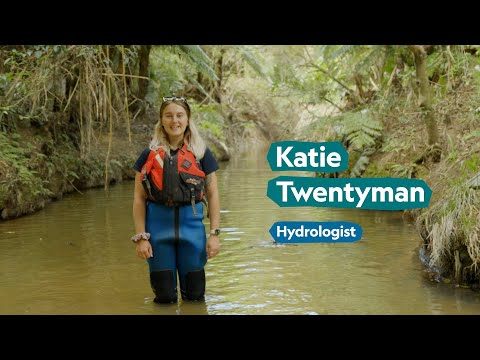
Much of a hydrologist's day involves measuring stream flows and lake levels, designing scientific investigations into groundwater or surface water, and writing reports that turn maps and field data into recommendations for agencies and municipalities. They dig into public water supply questions like flood and drought risk, water quality, and wetland impacts, translating research into guidance decision-makers can actually use. As hydrologists gain seniority, they often move from doing the fieldwork themselves to supervising the research assistants and technicians who now do it. The role typically requires a master's degree in hydrology, geology, or environmental science.
Pros
- High upside earning potential up to $153k with a master's degree, not a PhD
- Directly informs water resource management decisions with real-world environmental impact
- Varied work spanning fieldwork-based data collection and desk-based analysis and reporting
Cons
- Employment in this field is projected to shrink slightly (-0.1%) over the next decade
- A relatively small number of positions nationwide (500) limits where jobs are located
- Requires a master's degree in a specialized field before entering the profession
A typical day
The morning starts with a model run that finished overnight — a groundwater simulation of a proposed well field, and the hydrologist examines whether pumping would draw down neighboring wells or dry a wetland fed by the same aquifer. Mid-morning is a site visit: standing on a levee with county engineers, comparing the river's behavior against the flood model's predictions and noting where the two disagree. The afternoon splits between data and communication — quality-checking gauge records a technician collected, then drafting the section of a report that tells a city how much water it can sustainably promise developers. A late meeting with a state regulator turns technical work into policy consequence. Water problems are slow-moving and high-stakes, and the hydrologist's job is seeing them coming decades out.
Tasks at the job
- Prepare written and oral reports describing research results, using illustrations, maps, appendices, and other information.
- Design and conduct scientific hydrogeological investigations to ensure that accurate and appropriate information is available for use in water resource management decisions.
- Measure and graph phenomena such as lake levels, stream flows, and changes in water volumes.
- Conduct research and communicate information to promote the conservation and preservation of water resources.
- Coordinate and supervise the work of professional and technical staff, including research assistants, technologists, and technicians.
- Study public water supply issues, including flood and drought risks, water quality, wastewater, and impacts on wetland habitats.
Workplace & working conditions
Work happens indoors in a climate-controlled setting, and most of the day is spent sitting at a desk.
There's a regular, moderate amount of time pressure, and you're expected to exercise significant independent judgment day to day.
Education necessary or common
Master's degree in hydrology, geology, or environmental science
Common college majors
Licenses & certifications
- Professional Geologist (PG) license — common for hydrogeologists
- Professional Hydrologist certification (AIH)
- PE license for the engineering-track route
Career path
Related fields
Courses to take
- AP Environmental Science — the closest course to the discipline itself
- AP Chemistry — water chemistry underlies contamination and quality work
- AP Calculus — groundwater flow is described by differential equations
- Physics — fluid movement, pressure, and energy
- AP Statistics — trend detection in noisy environmental data
- AP Computer Science — modeling and data analysis increasingly run on code
Clubs, activities & competitions
- Science Olympiad — hydrogeology and earth science events
- Envirothon — team competition with a dedicated aquatics section
- Science fair with a water-focused project (well data, stream health, rainfall analysis)
- Volunteer watershed monitoring or stream cleanup programs
First steps you can take now
- Track a real river on USGS water data through a rainstorm and watch the hydrograph respond
- Do a backyard infiltration experiment comparing how fast water soaks into different soils
- Interview someone at your regional water district or USGS office
- Read about a real water conflict (the Colorado River is the classic) and the science inside it