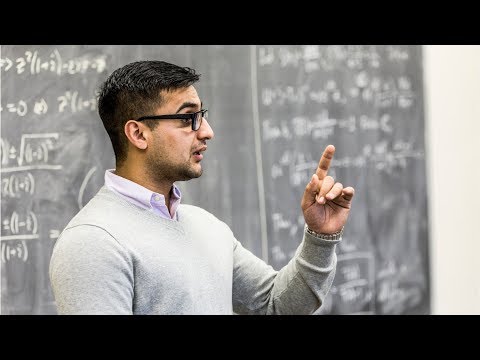
Photo: UC Davis College of Engineering (CC BY 2.0)
Job description
The job includes preparing syllabi and assignments, grading lab work and papers, and supervising undergraduate or graduate students through internships and research projects. Many engineering professors split time between the classroom and scholarship, writing grant proposals to fund their research and publishing findings in journals or books. Staying current means regularly reading new literature and attending conferences, and the role typically requires a PhD in the relevant engineering discipline, reflecting the expectation of both deep subject expertise and active research.
Pros
- High upside earning potential, up to $210k
- Much faster than average projected job growth (8.1% over the next decade)
- Combines hands-on research with mentoring undergraduate and graduate students
Cons
- Above-average hours, expect more than a standard 40-hour work week
- Requires a PhD in the relevant engineering field, a long credentialing path
- Funding pressure from having to write grant proposals to support research
A typical day
The morning might hold a 9 a.m. thermodynamics lecture for eighty sophomores, followed by office hours where two students work through a problem set at the whiteboard. Midday belongs to research: checking in with graduate students on an experiment, revising a journal manuscript, and answering a reviewer's objections line by line. There is a faculty meeting about curriculum changes at 3, then an hour writing a grant proposal that will fund next year's lab work. Evenings often absorb grading and lecture prep, because the teaching day and the research day are really two jobs sharing one calendar.
Tasks at the job
- Conduct research in a particular field of knowledge and publish findings in professional journals, books, or electronic media.
- Prepare course materials, such as syllabi, homework assignments, and handouts.
- Evaluate and grade students' class work, laboratory work, assignments, and papers.
- Write grant proposals to procure external research funding.
- Supervise undergraduate or graduate teaching, internship, and research work.
- Keep abreast of developments in the field by reading current literature, talking with colleagues, and participating in professional conferences.
Workplace & working conditions
Work happens indoors in a climate-controlled setting, and most of the day is spent sitting at a desk.
There's a regular, moderate amount of time pressure, and you're expected to exercise significant independent judgment day to day. The work is highly structured, following set procedures. You'll regularly deal with frustrated or upset people as part of the job.
Education necessary or common
Doctor of Philosophy (PhD) in the relevant field
Common college majors
Licenses & certifications
- PhD in an engineering discipline (the real credential)
- PE license strengthens credibility in practice-oriented programs
Career path
Related fields
Courses to take
- AP Calculus BC — the language of every engineering course you will ever teach
- AP Physics C — the foundation discipline
- AP Chemistry — essential for several engineering fields
- AP English Language — professors write constantly: papers, grants, feedback
- AP Computer Science A — research and teaching both lean on code
Clubs, activities & competitions
- Science Olympiad or Physics Olympiad — depth beyond the classroom
- FIRST Robotics — engineering practice plus mentoring younger members
- Tutoring math or science — teaching is a skill you can start building now
- Science fair with an original research project
First steps you can take now
- Email a nearby university's engineering department and ask to sit in on one lecture
- Tutor a younger student in math and notice what makes explanations land
- Try a summer research or engineering program (many universities run them for high schoolers)
- Read the path honestly: bachelor's, PhD, postdoc — a decade — and ask a professor if it was worth it