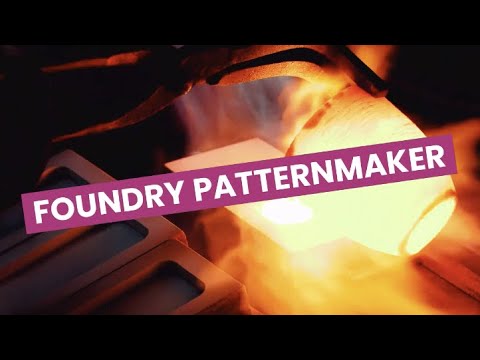
Photo: Psychlist1972 (CC BY 2.0)
Job description
The work starts with reading blueprints to compute dimensions and plan how a casting pattern or core box will be machined, then moves to setting up lathes, mills, and grinders to shape it, and finally to assembling, marking, and repairing patterns and templates as designs change. Foundry patternmaking has become a shrinking specialty, so most jobs today are concentrated in a small number of metal casting and foundry supply operations, with experienced patternmakers often the most senior tradesperson on a small shop floor.
Pros
- Skilled precision trade combining blueprint interpretation with hands-on machining
- Pay can reach over $80k for experienced patternmakers
- Entry through vocational training or apprenticeship rather than a four-year degree
Cons
- Employment is projected to shrink steeply over the next decade (-24.4%), among the fastest-declining trades
- Already a very small occupation nationwide, with only about 100 jobs projected in demand
- Above-average hours and a fast pace with real deadline pressure
A typical day
The job packet is a pump-housing pattern, and the morning starts at the CNC mill: the aluminum blank fixtured, the program proven out above the work, and the first roughing passes cutting the core box that will shape tomorrow's sand molds. Foundry math rides every dimension — shrink allowance for iron, draft angles so the pattern pulls clean, parting lines placed where the mold forgives them. Midday is bench work: gates and runners fitted, surfaces draw-filed and polished, because every scratch on the pattern prints on ten thousand castings. A worn pattern arrives for repair in the afternoon — welded, re-machined, and returned to service — followed by a first-article check against the blueprint with micrometers and gauge pins. The pattern ships tonight; castings begin next week. The foundry pours metal, but the patternmaker decides its shape.
Tasks at the job
- Verify conformance of patterns or template dimensions to specifications, using measuring instruments such as calipers, scales, and micrometers.
- Set up and operate machine tools, such as milling machines, lathes, drill presses, and grinders, to machine castings or patterns.
- Assemble pattern sections, using hand tools, bolts, screws, rivets, glue, or welding equipment.
- Mark identification numbers or symbols onto patterns or templates.
- Repair and rework templates and patterns.
- Read and interpret blueprints or drawings of parts to be cast or patterns to be made, compute dimensions, and plan operational sequences.
Workplace & working conditions
Work happens indoors in a climate-controlled setting, and most of the day is spent on your feet. Noise levels can be distracting or uncomfortable. The role involves regular exposure to hazardous equipment or conditions and contaminants, and standard protective equipment (gloves, safety glasses, and similar) is expected.
The pace is often fast, with real time pressure to meet deadlines. You'll regularly deal with frustrated or upset people as part of the job.
Education necessary or common
Vocational training, apprenticeship, or associate's degree
Licenses & certifications
- NIMS machining credentials
- OSHA 10
Career path
Related fields
Courses to take
- Machine Shop or Precision Machining CTE courses — the trade's hands and machines
- Drafting and CAD — patterns are blueprints made physical
- Geometry — draft, shrinkage, and parting-line logic
- Physics — how metal flows and solidifies
- Algebra II — shop math throughout
Clubs, activities & competitions
- SkillsUSA — machining and CAD competitions
- FIRST Robotics — precision fabrication
- 3D printing club — modern patternmaking increasingly prints prototypes
- Metal casting at a maker space or art program if available
First steps you can take now
- Cast something small (pewter or aluminum at a supervised maker space) to see molds and patterns interact
- Model a part with proper draft angles in free CAD software
- Visit a foundry or pattern shop — the trade is rare, respected, and hungry for young hands
- Learn to read a micrometer and calipers to a tenth