Photo: U.S. Navy (Public domain)
Job description
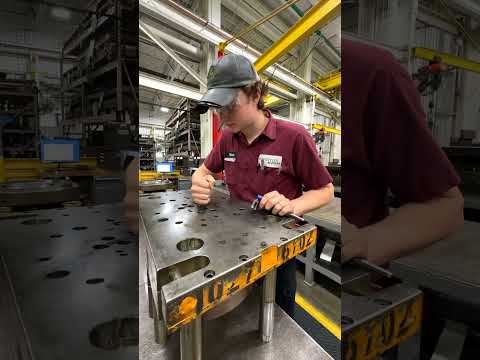
A project typically starts with studying blueprints or a part specification to plan the sequence of cuts, then moves to machining and fitting the actual die, jig, or tool on lathes, mills, and grinders, and finishes with inspecting the finished piece for smoothness and dimensional accuracy under close tolerances. Tool and die makers often specialize in a particular industry, such as automotive stamping or plastic injection molds, and experienced makers frequently move into precision inspection, CNC programming, or shop supervision.
Pros
- Pay can reach over $90k, well above many production trades, with a clear apprenticeship path
- Skilled, highly structured precision work requiring genuine independent judgment
- A larger occupation (4,700 projected jobs) than many related metalworking trades, so more openings exist
Cons
- Employment is projected to shrink over the next decade (-10.8%) as automation reduces demand
- Fast-paced work with real deadline pressure where precision and accuracy are essential
- Regular exposure to hazardous equipment and contaminants, with most of the day spent on your feet
A typical day
The morning starts at the surface grinder, bringing a die block to within a tenth of a thousandth -- a tolerance thinner than a human hair divided by thirty. The main project is a progressive stamping die: today's work is fitting the punch to its matrix, blueing the surfaces and stoning high spots until the parts kiss evenly. After lunch the CNC side takes over, programming a wire EDM to cut a form no grinder could reach. The day ends with tryout -- running strips through the die and reading the scrap edge like handwriting to see what needs a final polish.
Tasks at the job
- Verify dimensions, alignments, and clearances of finished parts for conformance to specifications, using measuring instruments such as calipers, gauge blocks, micrometers, or dial indicators.
- Visualize and compute dimensions, sizes, shapes, and tolerances of assemblies, based on specifications.
- Study blueprints, sketches, models, or specifications to plan sequences of operations for fabricating tools, dies, or assemblies.
- Fit and assemble parts to make, repair, or modify dies, jigs, gauges, and tools, using machine tools, hand tools, or welders.
- Inspect finished dies for smoothness, contour conformity, and defects.
- Select metals to be used from a range of metals and alloys, based on properties such as hardness or heat tolerance.
Workplace & working conditions
Most of the day is spent on your feet. Noise levels can be distracting or uncomfortable. The role involves regular exposure to hazardous equipment or conditions and contaminants, and standard protective equipment (gloves, safety glasses, and similar) is expected.
The pace is often fast, with real time pressure to meet deadlines, and you're expected to exercise significant independent judgment day to day. Precision and accuracy are essential to the work, and the work is highly structured, following set procedures.
Education necessary or common
Vocational training, apprenticeship, or associate's degree
Licenses & certifications
- NIMS machining credentials
- Registered tool and die apprenticeship (4-5 years)
Career path
Related fields
Courses to take
- Machine shop or manufacturing tech -- the direct foundation
- Geometry and Trigonometry -- toolmaking is applied precision math
- Drafting/CAD -- blueprints in, tooling out
- Physics -- material behavior under force
- Algebra II -- speeds, feeds, and offsets
Clubs, activities & competitions
- SkillsUSA precision machining competitions -- the recognized pipeline
- FIRST Robotics -- machining real parts for the robot
- Metal shop projects with tight tolerances
- A part-time job in a machine shop
First steps you can take now
- Take every machine shop class your school or community college offers
- Learn measurement first: micrometers, indicators, and gauge blocks
- Look up tool and die apprenticeships -- they're paid and lead to top-of-trade wages
- Machine a small project to a drawing and check every dimension