Photo: IPPA photographer (CC BY 4.0)
Job description
Beyond leading classes across different styles and skill levels, instructors choreograph routines for recitals and competitions, plan curricula that build skills progressively over a season, and coordinate the costuming, music, and staging that go into a showcase. Many piece together a career teaching hours across several studios rather than working for just one, and the job is physically demanding, with instructors demonstrating movement repeatedly across back-to-back classes. Evenings and weekends are the norm since classes fit around students' school schedules, and there's no formal degree requirement: a strong personal dance background functions as the real credential.
Pros
- No formal degree required, a strong personal dance background is the real qualifying credential
- Flexible scheduling that can piece together hours across multiple studios to build a full workload
- Creative outlet, choreographing routines and shaping students' growth over a season
Cons
- Above-average hours concentrated in evenings and weekends around students' school schedules
- Entry-level pay can be quite low, especially before building a following at multiple studios
- Physically demanding, demonstrating movement repeatedly across back-to-back classes all day
A typical day
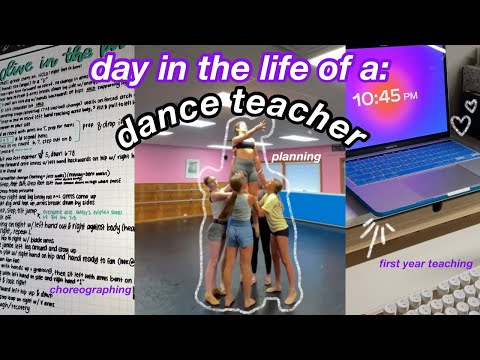
The studio wakes up mid-afternoon: the 4pm creative movement class for five-year-olds runs on songs, games, and herding energy, while the 5:15 intermediate jazz class is real technique — demonstrating the combination full-out, then walking the room correcting turnout, weight placement, and that one dancer's habit of dropping her chin. Evening belongs to the competition team: cleaning a routine eight counts at a time, making the correction stick with an image ("push the floor away") instead of repetition alone. Between classes the instructor plans progressions — this month's skills building toward recital choreography that flatters every level in the room. Recital season adds costume logistics and music edits; the year runs on the rhythm of fall enrollment to June stage.
Tasks at the job
- Teach choreography and technique appropriate to a class's style and skill level.
- Demonstrate steps and combinations, then observe and correct students' form.
- Choreograph routines for recitals, competitions, or performances.
- Plan class curricula that build skills progressively across a season.
- Coordinate costuming, music, and staging for recitals or showcases.
- Communicate student progress and behavior to parents or studio management.
Workplace & working conditions
Work happens in a dance studio with mirrored walls and a sprung floor, standing and moving for most of each class.
Evening and weekend hours are typical since classes are scheduled around students' school days, and the role is physically active throughout, demonstrating movement repeatedly across back-to-back classes. Pace intensifies before recitals or competitions, when rehearsal time and pressure both increase.
Education necessary or common
No formal degree required, though many hold dance degrees or certifications in a specific style; a strong personal dance background is the real credential
Licenses & certifications
- Dance teaching certifications (e.g. ABT National Training Curriculum, Acrobatic Arts)
- CPR/First Aid
- Progressing Ballet Technique certification (optional)
Career path
Related fields
Courses to take
- Dance — every style and level available; range makes better teachers
- Anatomy & Physiology — safe technique requires knowing the body
- Music — musicality is taught by people who have it
- Psychology — teaching kids is applied child development
- Business — many instructors run or eventually own studios
Clubs, activities & competitions
- Studio dance training in multiple styles
- Dance team — plus assist with choreography
- Assistant-teach or demo for younger classes at your studio — the true apprenticeship
- National Honor Society for Dance Arts
First steps you can take now
- Ask your studio about becoming a teaching assistant for a younger class
- Learn one new style this semester — versatility is employability
- Choreograph a 90-second piece and teach it to two friends
- Watch a master teacher's class online and study their corrections