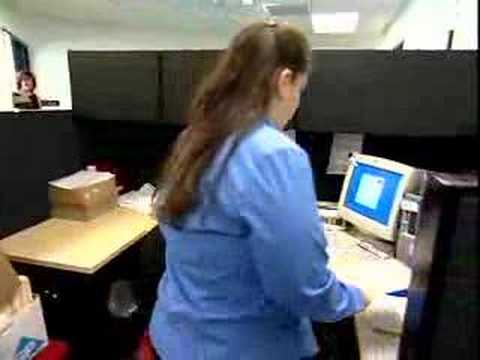
Photo: Department of Housing and Urban Development. Office of the Chief Human Capital O (Public domain)
Job description
The process starts with sitting down with an applicant to collect personal and financial data, then investigating their background and verifying references before assembling documents like title abstracts, insurance forms, and tax receipts for closing. Clerks check application and closing paperwork for accuracy, submit files to underwriting with a recommendation, and follow up with applicants by phone or mail about approval or rejection. It's a desk job with a fast pace and real time pressure around closing deadlines, and dealing with disappointed applicants who've been denied is a routine part of the work.
Pros
- Solid pay ceiling near $69.8k with only an associate's degree or vocational training needed
- Over 13,300 positions nationwide provide a reasonably broad job market
- Builds transferable financial and underwriting knowledge useful for banking career growth
Cons
- Employment in this field is projected to shrink over the next decade (-2.3%)
- Fast-paced work with real time pressure around loan closing deadlines
- Regularly deals with anxious or frustrated applicants awaiting approval decisions
A typical day
The 9am applicant is buying her first house, and the interviewer walks her through the application with patience the online form never offers — employment history, assets, debts — translating anxiety into a complete file. Verification is the day's engine: employers called to confirm jobs, bank statements matched against stated deposits, and a discrepancy handled without accusation (the applicant forgot a closed account; it happens daily). Late morning brings the document chase — the underwriter needs two more items on the Hendersons' file before Friday's closing, and the clerk's friendly persistence gets them by noon. The afternoon is file assembly: disclosures sent on regulatory deadlines that have zero flexibility, a closing package ordered, and the pipeline spreadsheet updated so nothing slips. The job sits at the human end of lending: every complete file is a family moving, a business opening, a car in a driveway.
Tasks at the job
- Verify and examine information and accuracy of loan application and closing documents.
- Assemble and compile documents for loan closings, such as title abstracts, insurance forms, loan forms, and tax receipts.
- Submit loan applications with recommendation for underwriting approval.
- Contact customers by mail, telephone, or in person concerning acceptance or rejection of applications.
- Interview loan applicants to obtain personal and financial data and to assist in completing applications.
- Prepare and type loan applications, closing documents, legal documents, letters, forms, government notices, and checks, using computers.
Workplace & working conditions
Work happens indoors in a climate-controlled setting, and most of the day is spent sitting at a desk.
The pace is often fast, with real time pressure to meet deadlines, and you're expected to exercise significant independent judgment day to day. Precision and accuracy are essential to the work, and the work is highly structured, following set procedures. You'll regularly deal with frustrated or upset people as part of the job.
Education necessary or common
Vocational training, apprenticeship, or associate's degree
Licenses & certifications
- NMLS registration (employer-sponsored, for licensed activities)
- American Bankers Association certificates
- Notary public commission — useful in every loan office
Career path
Related fields
Courses to take
- Business Math — income, debts, and ratios all day
- Computer Applications — loan origination systems and document handling
- AP English Language — professional communication with anxious people
- Business or Personal Finance electives — the lending vocabulary
- AP Psychology — patience and rapport are job skills
Clubs, activities & competitions
- FBLA — banking and finance events
- DECA — finance role-plays
- Club treasurer — money records and accountability
- Any customer service job — the desk manner transfers
First steps you can take now
- Learn what a credit score is, what moves it, and why lenders care — free resources abound
- Practice explaining a form to someone clearly (tax forms and FAFSA are great practice)
- Ask a bank about teller or clerk openings — banks hire at 18 and promote from the teller line constantly
- Build spreadsheet fluency this month