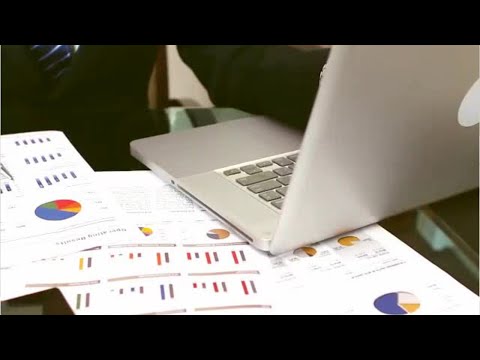
Photo: U.S. Air Force photo by Airman 1st Class Arnet Tamayo (Public domain)
Job description
Credit analysts pull together income data, market share, and management quality to estimate whether a loan will actually get paid back, then package those findings into loan applications and risk reports for a loan committee to review. Much of the day is spent at a desk, often under real deadline pressure, running financial ratios through computer programs and comparing a business against similar companies in its industry and region. It's precise, structured work that typically requires a Bachelor's degree, with pay ranging widely depending on experience and the size of the institution.
Pros
- Top pay reaches $169k, strong upside for a bachelor's-level analytical role
- Fully desk-based, climate-controlled work with predictable, structured analysis tasks
- Skills in financial statement analysis and risk modeling transfer across banking and corporate finance
Cons
- Employment projected to shrink over the next decade (-4.4%)
- Above-average hours, expect more than a standard 40-hour week
- Fast pace with real deadline pressure on loan and credit decisions
A typical day
The morning queue holds a $2 million equipment loan request from a regional trucking company: three years of financial statements get spread into the model, ratios computed — debt service coverage, leverage, liquidity — and then the real analysis starts, because the numbers only mean something in context. Revenue dipped last year; the analyst calls the relationship manager to learn why (a lost contract, since replaced — the story matters). By afternoon the write-up takes shape: strengths, risks, mitigants, and a recommendation with a defended risk rating, headed to loan committee Thursday. A covenant-monitoring alert interrupts — an existing borrower's quarterly numbers tripped a threshold, and that conversation needs scheduling. Skepticism, applied kindly, is the core competency.
Tasks at the job
- Analyze credit data and financial statements to determine the degree of risk involved in extending credit or lending money.
- Complete loan applications, including credit analyses and summaries of loan requests, and submit to loan committees for approval.
- Generate financial ratios, using computer programs, to evaluate customers' financial status.
- Prepare reports that include the degree of risk involved in extending credit or lending money.
- Analyze financial data, such as income growth, quality of management, and market share to determine expected profitability of loans.
- Compare liquidity, profitability, and credit histories of establishments being evaluated with those of similar establishments in the same industries and geographic locations.
Workplace & working conditions
Work happens indoors in a climate-controlled setting, and most of the day is spent sitting at a desk.
The pace is often fast, with real time pressure to meet deadlines. Precision and accuracy are essential to the work, and the work is highly structured, following set procedures.
Education necessary or common
Bachelor's degree
Common college majors
Licenses & certifications
- Credit Risk Certification (RMA-CRC, later)
- CFA for advancement
Career path
Related fields
Courses to take
- Algebra II/Precalculus — ratio analysis is daily arithmetic with judgment
- AP Statistics — risk is a statistical idea
- Economics — borrowers live in economic cycles
- Accounting/Business electives — financial statements are the raw material
- AP English Language — the credit memo is a persuasive document
Clubs, activities & competitions
- FBLA or DECA finance events
- Investment or stock market club
- Math team
- Treasurer of any organization — real financial stewardship
First steps you can take now
- Learn to read the three financial statements with a free course
- Pick a public company and decide: would you lend it money? Write one page
- Ask a banker what makes them decline a loan
- Build a personal budget and track it for a month — cash flow intuition starts at home