Photo: Johnnybam (CC BY-SA 4.0)
Job description
Heats metal in a forge until it's malleable, then hammers, bends, and welds it into tools, hardware, decorative pieces, or custom commissions taken directly from a client's sketch or a historical pattern. The trade ranges from a small artisan studio selling handmade pieces directly to customers, to specialized niches like bladesmithing or architectural ironwork. Work is physically demanding, done around an always-hot forge with real risk of burns, so heavy gloves and protective gear are essential. Most blacksmiths learn through an apprenticeship or a dedicated blacksmithing school rather than a college degree.
Pros
- Hands-on, self-directed craft work, often building custom pieces to a client's own design
- Low barrier to entry, apprenticeship or blacksmithing school rather than a college degree
- Tangible, lasting output ranging from practical tools to decorative architectural ironwork
Cons
- Above-average hours are common, often exceeding a standard 40-hour week
- Physically strenuous work, repetitive heavy hammering and lifting hot metal with real burn risk
- Entry-level pay can be quite low before building a reputation for custom commission work
A typical day
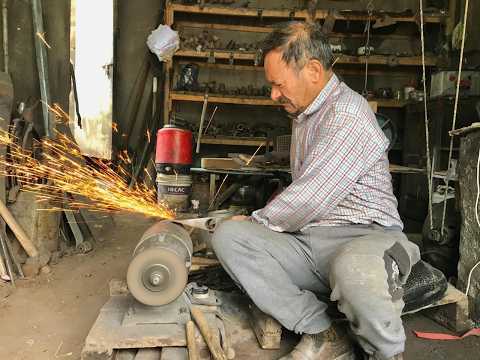
The forge takes twenty minutes to reach working heat, and the smith uses them to lay out the day: a set of fireplace tools to finish, a commissioned gate hinge, and a knife blank a customer wants pattern-welded. Then the rhythm the trade is named for — steel into the fire until it glows orange-yellow, onto the anvil for the ten seconds it moves willingly under the hammer, back into the fire. Drawing out, tapering, scrolling: each shape is a sequence of heats planned like chess moves. The afternoon holds finish work at the grinder and wire wheel, a coat of wax on cooling iron, and photographs for the online shop that sells most modern smiths' work. Shoulders earn their soreness; the pile of finished work is the payoff.
Tasks at the job
- Heat metal in a forge until it's malleable enough to shape.
- Hammer, bend, and shape heated metal on an anvil into tools, hardware, or decorative pieces.
- Weld or join separate metal pieces using heat and hammer technique or modern welding equipment.
- Temper and quench finished pieces to achieve the right hardness and durability.
- Design custom ironwork based on a client's sketches or a historical pattern.
- Maintain the forge, anvil, and hand tools used throughout the shaping process.
Workplace & working conditions
Work happens in a forge that runs hot year-round, with smoke, open flame, and heavy noise from hammering metal.
The job is physically strenuous, involving repetitive heavy hammering and lifting hot metal, with a constant risk of burns that makes protective gear essential. The pace is typically self-directed around custom orders rather than externally timed, though production smithing can be more repetitive and schedule-driven.
Education necessary or common
No formal degree required, though many train through an apprenticeship or blacksmithing school
Licenses & certifications
- AWS welding certifications (broaden income options)
- ABANA curriculum levels (guild-based, optional)
Career path
Related fields
Courses to take
- Metal Shop / Welding — the adjacent skills every working smith uses
- Chemistry — heat treatment is metallurgy, and metallurgy is chemistry
- Art — forged work sells on design as much as craft
- Physics
- Business math — most smiths are self-employed
Clubs, activities & competitions
- SkillsUSA welding/metalworking
- Art club
- 4-H metalworking projects where offered
- Maker spaces with hot-metal programs
First steps you can take now
- Take a beginner blacksmithing class — ABANA-affiliated groups and local guilds run intro weekends all over the country
- Watch heat-treatment basics and learn why quenching and tempering work
- Visit a working smith's shop or a demonstration at a county fair and ask about apprenticing
- Start with cold metalwork at home: filing, riveting, and finishing teach patience the forge will demand