Photo: Sheba_Also 43,000 photos (CC BY-SA 2.0)
Job description
Forecasters spend the day reading data from satellites, radar, and weather balloons, running computer models to predict storms and temperature swings, and translating that into clear public forecasts and warnings, frequently on camera or coordinating directly with emergency officials. Shifts run around the clock since weather doesn't respect business hours, and the pace turns intense during severe weather, when a fast, accurate warning genuinely protects lives. It blends real atmospheric-science training with on-air presentation skill, a track distinct from the research side of meteorology.
Pros
- High upside earning potential up to $150k, especially for on-air roles in larger markets
- Direct, tangible public impact, accurate warnings during severe weather protect lives and property
- Blends science and communication skill, combining atmospheric data analysis with on-air presentation
Cons
- Shifts run around the clock since weather doesn't keep business hours, including nights and holidays
- Work turns intense and high-stakes during active storms, requiring nonstop monitoring under pressure
- Broadcast roles require both a meteorology degree and on-camera presentation skill, a narrower combination
A typical day
The 2:30am alarm is the price of the morning show: by 3:30 the forecaster is at the station comparing overnight model runs that disagree about tomorrow's snow line by fifty miles. The forecast gets built by 5am -- not copied from an app, but reasoned from soundings, surface maps, and hard-won local pattern knowledge -- then translated into graphics viewers can absorb in seconds. Live hits run every half hour through 7am, each one slightly different, all without a script. A developing severe-weather setup for the weekend means the afternoon's handoff briefing carries real stakes, because someone's Saturday plans are the easy part; someone's safety is the rest.
Tasks at the job
- Analyze data from satellites, radar, weather balloons, and ground stations to track current conditions.
- Run and interpret computer forecast models to predict temperature, precipitation, and storm movement.
- Issue public forecasts, weather advisories, and warnings for severe conditions like storms or floods.
- Communicate forecasts on air, online, or to emergency officials in clear, timely language.
- Monitor developing weather systems continuously during active storms or severe weather events.
- Coordinate with emergency management agencies during hazardous or life-threatening weather.
Workplace & working conditions
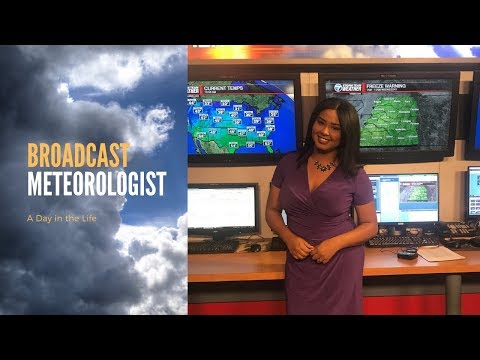
Work happens indoors in an operations center or studio surrounded by monitors displaying live radar, satellite imagery, and model output.
Shifts run around the clock since weather doesn't keep business hours, and the pace turns intense and high-stakes during severe weather, when a fast, accurate warning can protect lives and property. Routine days are calmer but still require constant monitoring and precise, clearly communicated updates.
Education necessary or common
Bachelor's degree in meteorology or atmospheric science; on-camera roles also require broadcasting skill
Common college majors
Licenses & certifications
- AMS Certified Broadcast Meteorologist (CBM, broadcast track)
Career path
Related fields
Courses to take
- AP Physics 1/C -- the atmosphere obeys fluid dynamics
- AP Calculus AB/BC -- meteorology degrees require the full sequence
- Earth science -- weather and climate foundations
- AP Computer Science Principles -- models and data tools
- Public speaking -- broadcast roles live on camera
Clubs, activities & competitions
- School morning-announcements weather segment -- start one
- Science Olympiad meteorology events
- Amateur weather station at home -- log and forecast daily
- School TV/broadcast club
First steps you can take now
- Make your own forecast every day for a month and score it against reality
- Learn to read model output on free sites (Pivotal Weather, NWS forecast discussions)
- Read your local NWS office's forecast discussion daily -- it's a free masterclass
- Record a practice weathercast in front of a map