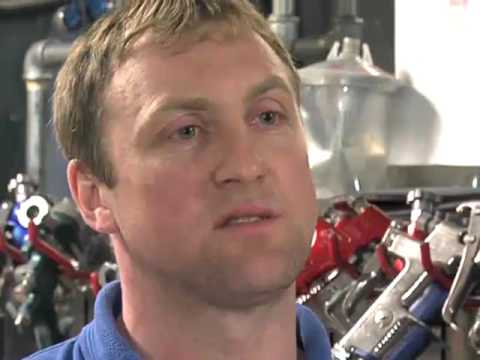
Photo: National Institute for Occupational Safety and Health (NIOSH) (CC BY 2.0)
Job description
The job includes touching up spots the spray gun can't reach with a hand brush, then buffing and waxing the finished surface once it's dry. Operators watch each piece for flaws like blisters or streaks and troubleshoot the cause, whether that's the equipment or the technique, and periodically disassemble and clean the sprayer with solvents and wire brushes to keep it running well. Much of the shift is spent on your feet around noise and airborne chemicals, so protective gear is standard, and the pace tends to be fast with real deadline pressure. Some in this field specialize in painting vehicles, such as in an auto body shop.
Pros
- Accessible entry with just a high school diploma and on-the-job training
- Solid demand with about 15,800 positions across manufacturing and auto-body settings
- Hands-on, detail-oriented finishing work with a visible, tangible end result
Cons
- Slower than average projected job growth compared to other fields
- Regular exposure to hazardous chemicals, paint fumes, and industrial noise
- Fast-paced work with real deadline pressure to keep the line moving
A typical day
Shift starts at the booth: checking viscosity on the day's coating, loading the spray guns, and running a test panel before production parts hit the line. Once the conveyor moves, the rhythm is watch-and-adjust — a blister or streak on a part means stopping to diagnose whether it's gun pressure, humidity, or contamination, and fixing it before a hundred more parts come through wrong. Some pieces need hand retouching with a brush where the gun can't reach. End of shift is teardown: disassembling and solvent-cleaning the sprayers, logging output, and handling waste properly because coating chemicals are regulated for a reason.
Tasks at the job
- Dispose of hazardous waste in an appropriate manner.
- Use brush to hand-paint areas in need of retouching or unreachable with a spray gun.
- Monitor painting operations to identify flaws, such as blisters or streaks, and correct their causes.
- Disassemble, clean, and reassemble sprayers or power equipment, using solvents, wire brushes, and cloths.
- Clean equipment and work areas.
- Buff and wax the finished paintwork.
Workplace & working conditions
Most of the day is spent on your feet. Noise levels can be distracting or uncomfortable. The role involves regular exposure to hazardous equipment or conditions and contaminants, and specialized protective equipment is standard.
The pace is often fast, with real time pressure to meet deadlines.
Education necessary or common
High school diploma; some on-the-job training or apprenticeship
Licenses & certifications
- OSHA 10
- EPA 6H rule training for spray finishing
- I-CAR refinish certifications (for automotive paths)
Career path
Related fields
Courses to take
- Chemistry — coatings, solvents, and cure behavior are chemistry
- Auto Shop or Industrial Tech — spray technique and equipment maintenance
- Algebra — mixing ratios and coverage calculations
- Art — a good eye for finish quality is a genuine advantage
Clubs, activities & competitions
- SkillsUSA — automotive refinishing and industrial tracks
- Auto body work on a personal or family project vehicle
- Part-time work at a body shop or manufacturing plant
- Theater set-building crew — real spray and finish experience
First steps you can take now
- Practice spray technique with rattle cans on scrap — learn consistent passes and coats
- Ask a local auto body shop about entry-level prep positions
- Take a free OSHA-10 course to learn hazardous-material handling basics
- Tour a manufacturing facility with a paint line