Photo: Raymond Wambsgans (CC BY-SA 2.0)
Job description
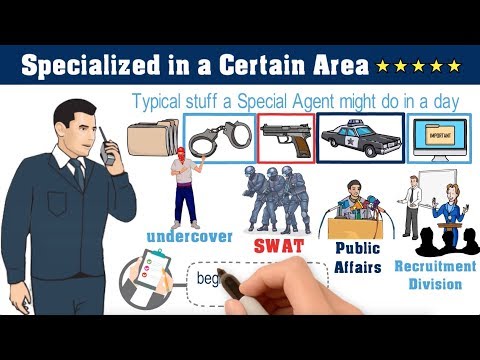
Agents gather admissible evidence, interview witnesses and suspects, and conduct surveillance, then work with federal prosecutors to build a case, sometimes executing search warrants or making arrests as an investigation wraps up. Assignments vary widely by field office, so one agent might spend years on counterterrorism while another focuses on white-collar crime. The work carries genuine physical and legal risk, hours can turn unpredictable the moment a case breaks, and agents operate within a strict legal framework even while exercising real independent judgment.
Pros
- High upside earning potential, up to $145k, for federal law-enforcement work
- Wide variety of assignments, from counterterrorism to white-collar crime, depending on a field office's needs
- Substantial independent judgment conducting investigations that can lead directly to arrests and prosecutions
Cons
- Above-average hours, expect more than a standard 40-hour work week, with unpredictable spikes when cases break
- Genuine physical and legal risk involved in surveillance, undercover work, and executing arrests
- Regular exposure to disturbing case material and high-stress investigative work
A typical day
The squad meeting at 8 sets the day: the agent's health care fraud case gets a green light for records subpoenas, and a partner needs cover on a source meeting at noon. The morning is document work — tracing payments across shell company accounts and building the link chart that will anchor the affidavit. The source meeting happens in a parked car across town, twenty minutes of careful questions. The afternoon goes to drafting a search warrant application with a federal prosecutor, exact to the address and the item, because a sloppy paragraph can sink a case. Some days end at the range or the gym; fitness and firearms proficiency never stop being job requirements.
Tasks at the job
- Investigate violations of federal law and gather admissible evidence.
- Conduct surveillance operations and witness or suspect interviews.
- Execute search warrants and make arrests as investigations conclude.
- Prepare detailed case reports to support federal prosecution.
- Testify in court regarding investigative findings.
- Coordinate investigations with other federal, state, and local agencies.
Workplace & working conditions
Work moves between an office setting and the field, including surveillance and undercover assignments, with regular travel depending on casework.
The work carries genuine physical and legal risk, and hours are often unpredictable when cases break. Independent judgment is exercised within a strict framework of legal procedure, and agents are sometimes exposed to disturbing case material.
Education necessary or common
Bachelor's degree plus at least two years of professional work experience (or an advanced degree), then FBI Academy training
Common college majors
Licenses & certifications
- FBI Academy at Quantico (post-hire)
- CPA, bar admission, or network certifications strengthen candidacy
- Top Secret clearance (obtained in process)
Career path
Related fields
Courses to take
- AP Government — federal law and the courts are the operating system
- AP Statistics — fraud and intelligence work run on data analysis
- AP Psychology — interviewing and source work are applied psychology
- A world language (Spanish, Mandarin, Arabic especially) — a genuine hiring advantage
- Accounting — financial crime cases reward it; many agents are ex-accountants
Clubs, activities & competitions
- Mock Trial — evidence and testimony from the inside
- JROTC or a fitness discipline — the Academy has physical standards
- Debate or Model UN
- Boys/Girls State or a civic leadership program
First steps you can take now
- Read the FBI's actual special agent requirements: degree, 2 years' work experience, age 23-36 at appointment
- Build toward a skill the Bureau hires for: accounting, computer science, languages, or law
- Attend an FBI or police department community academy program
- Stay clean — the background check covers your whole record, including now