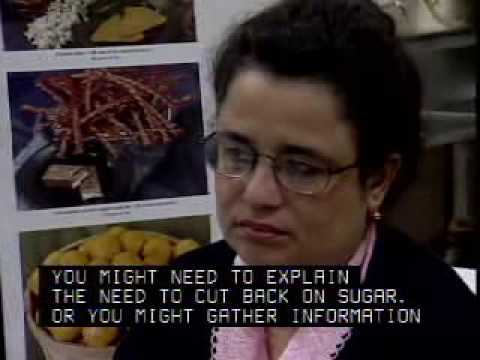
Photo: Department of Agriculture. Office of Governmental and Public Affairs. Photograph (Public domain)
Job description
Day-to-day work splits between the kitchen and the patient floor: preparing meals at the right quantities, then tracking how much a patient is actually eating and reporting weight changes or emerging problems back to the supervising dietitian. Technicians also run parts of the nutrition education side, conducting dietary history assessments and helping lead orientation or in-service sessions for staff or patients. Because food service intersects with patient health, they often sit in on interdisciplinary care meetings alongside nurses and other providers. It's typically an associate's-degree or vocational-training role, spent mostly on your feet in a busy, team-based healthcare setting.
Pros
- Lower barrier to entry via vocational training, apprenticeship, or associate's degree
- Standard, predictable full-time hours (40-45 per week)
- Hands-on, team-based work directly supporting patient nutrition and care
Cons
- Entry-level pay can be quite low
- Most of the day is spent on your feet in close proximity to coworkers or the public
- Fast pace with real deadline pressure and regular contact with frustrated or upset people
A typical day
The tray line starts early: breakfast for two hundred patients, each tray checked against the diet order — renal, cardiac, pureed, carb-controlled — because a wrong tray isn't a mistake, it's a clinical event. Mid-morning the dietetic technician works the floors: recording what patients actually ate (the untouched half of every meal tells its own story), weighing the patient whose intake has been slipping, and flagging both to the dietitian with notes. A bedside diet history with a new admission follows — what they eat at home, allergies, the cultural preferences the meal plan should honor. The afternoon holds a group education session on diabetic carb counting, taught with food models and patience. It's nutrition care delivered at the practical level where it either happens or doesn't.
Tasks at the job
- Prepare a major meal, following recipes and determining group food quantities.
- Select, schedule, or conduct orientation or in-service education programs.
- Observe and monitor patient food intake and body weight, and report changes, progress, and dietary problems to dietician.
- Conduct nutritional assessments of individuals, including obtaining and evaluating individuals' dietary histories, to plan nutritional programs.
- Supervise food production or service or assist dietitians or nutritionists in food service supervision or planning.
- Attend interdisciplinary meetings with other health care professionals to discuss patient care.
Workplace & working conditions
Work happens indoors in a climate-controlled setting, and most of the day is spent on your feet, and you work in close physical proximity to coworkers or the public for much of the shift. Noise levels can be distracting or uncomfortable. The role involves regular exposure to contaminants, and standard protective equipment (gloves, safety glasses, and similar) is expected.
The pace is often fast, with real time pressure to meet deadlines, and you're expected to exercise significant independent judgment day to day. Precision and accuracy are essential to the work. You'll regularly deal with frustrated or upset people as part of the job, and almost all of the work is done as part of a team.
Education necessary or common
Vocational training, apprenticeship, or associate's degree
Licenses & certifications
- NDTR (Nutrition and Dietetics Technician, Registered)
- Food handler's/ServSafe certification
Career path
Related fields
Courses to take
- Health/Nutrition — the subject itself
- Biology — the science under the diet orders
- Chemistry — nutrients are chemistry
- Family and Consumer Sciences/Culinary — food skills matter
- Psychology — eating behavior is behavior
Clubs, activities & competitions
- HOSA nutrition events
- FCCLA — nutrition and wellness competitions
- Cook at home seriously — meal planning practice
- Volunteer at a food bank or congregate meal program
First steps you can take now
- Track your own eating for two weeks with a nutrition app and learn what the numbers mean
- Get a food handler's card
- Volunteer at a hospital or senior center meal program
- Look up NDTR-eligible dietetic technician programs