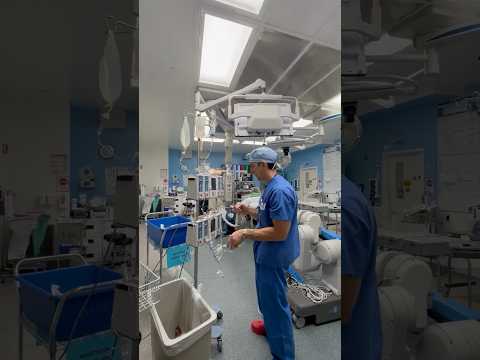
Photo: U.S. Air Force photo by Maj. Stephani Schafer (Public domain)
Job description
Before a patient goes under, nurse anesthetists build an anesthesia care plan and prepare the right drugs, fluids, and equipment for the procedure ahead. During surgery, they manage the patient's airway and breathing, sometimes through intubation or mechanical ventilation, while continuously tracking vital signs like heart rate, blood pressure, and oxygenation for any sign of trouble. Many also perform regional techniques such as epidurals, spinal blocks, or nerve blocks rather than only general anesthesia. It's fast-paced, highly structured work where mistakes carry serious consequences, done as part of a surgical team, and it requires a doctoral-level nurse anesthesia degree plus national certification, with strong pay from about $155,000 to $339,500 and demand growing faster than average.
Pros
- Among the highest-paid nursing specialties, topping out near $340k
- Much faster than average projected job growth (8.6%)
- Highly specialized, hands-on skill set (airway management, regional blocks) in constant demand
Cons
- Above-average hours, with unpredictable surgical schedules on top of a 40-50 hour week
- A relatively small, specialized field, so openings can be geographically limited
- High-stakes work where mistakes have serious, immediate consequences for patients
A typical day
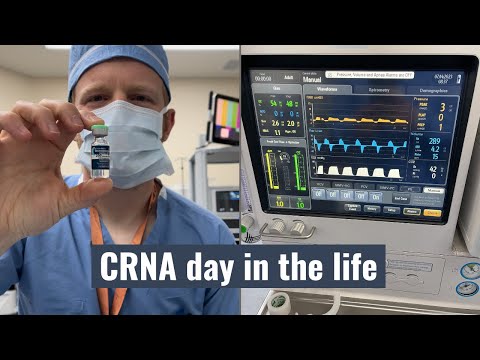
The 6:15am start is pre-op: reviewing the first patient's history, airway anatomy, and labs, then the machine check — every anesthesia workstation proven functional before a single drug is drawn. By 7:30 the CRNA is inducing the day's first case, the most choreographed minutes in medicine: preoxygenation, medications timed to the second, airway secured, and vitals stabilized before the surgeon touches skin. Through the case the work looks calm and isn't — titrating agents against blood pressure, ventilation, and surgical stimulus, thinking two steps ahead of physiology. Three more cases follow, including a nervous eight-year-old whose induction takes as much psychology as pharmacology. Between cases: PACU handoffs, documentation, and a block placed for post-op pain. Emergence from the final case ends the clinical day; the vigilance never fully switches off.
Tasks at the job
- Manage patients' airway or pulmonary status, using techniques such as endotracheal intubation, mechanical ventilation, pharmacological support, respiratory therapy, and extubation.
- Monitor patients' responses, including skin color, pupil dilation, pulse, heart rate, blood pressure, respiration, ventilation, or urine output, using invasive and noninvasive techniques.
- Select, order, or administer anesthetics, adjuvant drugs, accessory drugs, fluids or blood products as necessary.
- Select, prepare, or use equipment, monitors, supplies, or drugs for the administration of anesthetics.
- Perform or manage regional anesthetic techniques, such as local, spinal, epidural, caudal, nerve blocks and intravenous blocks.
- Develop anesthesia care plans.
Workplace & working conditions
Work happens indoors in a climate-controlled setting, and you work in close physical proximity to coworkers or the public for much of the shift. Noise levels can be distracting or uncomfortable. The role involves regular exposure to contaminants, and specialized protective equipment is standard.
The pace is often fast, with real time pressure to meet deadlines, and you're expected to exercise significant independent judgment day to day. Mistakes can have serious consequences, so accuracy matters a lot, and the work is highly structured, following set procedures. You'll regularly deal with frustrated or upset people as part of the job, and almost all of the work is done as part of a team.
Education necessary or common
Doctor of Nursing Practice (DNP) or an equivalent doctoral degree in nurse anesthesia, plus national certification
Common college majors
Licenses & certifications
- Registered Nurse (RN) license
- CCRN (critical care, pre-requisite experience credential)
- National Board Certification (NBCRNA) as CRNA
Career path
Related fields
Courses to take
- AP Biology — the first layer of the deepest physiology education in nursing
- AP Chemistry — pharmacology is chemistry with consequences
- Anatomy and Physiology — airway and cardiovascular anatomy become daily working knowledge
- AP Calculus or AP Statistics — dosing math and research literacy
- AP Psychology — calming terrified patients is a clinical skill
Clubs, activities & competitions
- HOSA-Future Health Professionals — nursing and clinical events
- Hospital volunteering — ask about surgical services or PACU visibility
- Lifeguarding or EMT-adjacent training — real responsibility for human safety
- Science Olympiad — Anatomy and Physiology
First steps you can take now
- Map the full path now: BSN, then ICU nursing experience (required), then a doctoral nurse anesthesia program — roughly a decade, with exceptional pay and autonomy at the end
- Shadow a nurse in an ICU or a CRNA if a family connection allows it
- Get CPR certified and take the hardest science schedule available
- Interview an ICU nurse about what critical-care nursing — the mandatory middle step — actually involves