Photo: Walter Siegmund (CC BY 2.5)
Job description
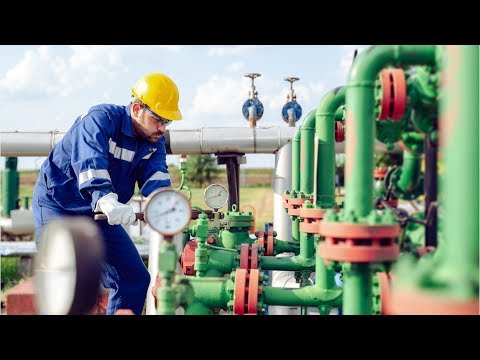
Operators watch gauges, meters, and control panels to catch problems early, signaling coworkers by radio or phone to open valves, adjust pumps, or check temperatures as needed. Some specialize in gauging oil in storage tanks, others in regulating flow into pipelines, but all of it runs on a highly structured process schedule where a mistake can have serious consequences. Much of the job happens outdoors, often at heights and around hazardous equipment, which is why standard protective gear and close teamwork with coworkers are a constant part of the role.
Pros
- Strong pay for a high-school-entry role, topping out near $116k
- No degree required, just a high school diploma and on-the-job training
- Team-based work with structured procedures rather than solo, ad hoc troubleshooting
Cons
- Physically demanding outdoor work exposed to weather, heights, and hazardous equipment
- Employment projected to shrink slightly over the next decade (-2.8%)
- Mistakes can have serious consequences, adding real pressure to get it right
A typical day
The board operator's shift starts at 5:45am with relief turnover: unit status, active alarms, and the crude switch scheduled for 10:00 walked through before the previous shift leaves. The control room's wall of screens is the refinery's nervous system, and the morning is disciplined watching — temperatures, pressures, and flows on the crude unit held inside limits, a furnace outlet trending warm caught and corrected with a burner adjustment before it becomes an event. The outside operator half of the job lives in the unit itself: field rounds in FRC and hard hat, pump seals checked, levels verified by sight glass against the board's numbers, a steam leak tagged. The 10am crude switch is the day's choreography — two hours of coordinated valve moves and setpoint ramps done to a written procedure. Afternoon brings a gauging round on the tank farm, samples pulled and logged for the lab, and permit paperwork for tomorrow's maintenance job. Handover notes get written like they matter, because at 5:45pm someone else's safety depends on them.
Tasks at the job
- Signal other workers by telephone or radio to operate pumps, open and close valves, and check temperatures.
- Maintain and repair equipment, or report malfunctioning equipment to supervisors so that repairs can be scheduled.
- Monitor process indicators, instruments, gauges, and meters to detect and report any possible problems.
- Start pumps and open valves or use automated equipment to regulate the flow of oil in pipelines and into and out of tanks.
- Operate control panels to coordinate and regulate process variables such as temperature and pressure, and to direct product flow rate, according to process schedules.
- Verify that incoming and outgoing products are moving through the correct meters, and that meters are working properly.
Workplace & working conditions
Work happens primarily outdoors, exposed to whatever the weather is doing. Noise levels can be distracting or uncomfortable. The role involves regular exposure to hazardous equipment or conditions and contaminants and working at heights, and standard protective equipment (gloves, safety glasses, and similar) is expected.
There's a regular, moderate amount of time pressure. Mistakes can have serious consequences, so accuracy matters a lot, and the work is highly structured, following set procedures. Almost all of the work is done as part of a team.
Education necessary or common
High school diploma; some on-the-job training or apprenticeship
Common college majors
Licenses & certifications
- OSHA 10 (general industry)
- TWIC card (port-area facilities)
- Process technology certificate
Career path
Related fields
Courses to take
- Chemistry — distillation and reactions are the process
- AP Physics — pressure, heat transfer, and flow
- Algebra II — process math and unit conversions
- Electronics or Process Technology CTE courses — instrumentation and controls
- English — procedures and turnover logs demand precise reading and writing
Clubs, activities & competitions
- SkillsUSA — industrial and process technology events
- Science Olympiad — chemistry events
- FIRST Robotics — systems thinking
- Any job with strict procedures and shift handoffs
First steps you can take now
- Look up Process Technology (PTEC) associate's programs — refineries hire straight from them at strong wages
- Earn OSHA 10 general industry online
- Watch a refinery process overview video until distillation towers make sense
- Ask a refinery or chemical plant about summer internships and operator trainee requirements