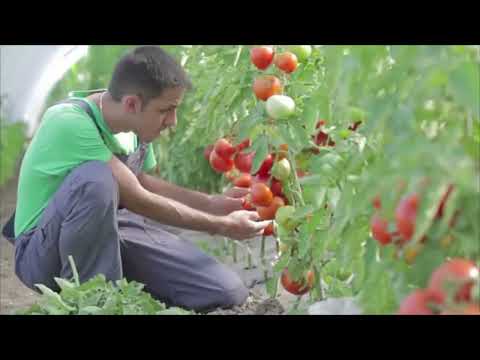
Photo: U.S. Department of Agriculture (Public domain)
Job description
The role blends fieldwork with desk work: contractors recruit and hire agricultural workers, sometimes through foremen who handle the direct, day-to-day instructing and task assignment, and take care of the practical logistics of running a crew, paying wages, providing food and water, arranging field sanitation, and furnishing tools. Because the work is tied tightly to planting and harvest timing, contractors operate under real deadline pressure and need to make independent calls quickly when a crew's needs shift.
Pros
- Faster than average projected job growth (6% over the next decade)
- Low educational barrier to entry, a high school diploma with on-the-job training
- Mix of outdoor fieldwork and supervisory responsibility rather than a purely deskbound role
Cons
- Very small number of positions nationwide (about 300), so opportunities are geographically limited
- Regular outdoor exposure to weather and contaminants while managing labor logistics
- Above-average hours with fast-paced, deadline-driven demands during peak seasonal periods
A typical day
The day starts before the crews do: confirming forty workers for two orchards, arranging the vans, and checking that water coolers, shade canopies, and field toilets are loaded — the law requires them and so does decency. Through the morning the contractor moves between fields, tracking bins picked per row, resolving a pay dispute, and negotiating tomorrow's start time with a grower watching the weather. The afternoon is paperwork with teeth: payroll with correct piece-rate calculations, workers' comp documentation, and housing inspections if the crew is migrant labor. The margin lives on organization, and the reputation lives on treating workers right.
Tasks at the job
- Pay wages of contracted farm laborers.
- Provide food, drinking water, and field sanitation facilities to contracted workers.
- Recruit and hire agricultural workers.
- Supervise the work of contracted employees.
- Furnish tools for employee use.
- Employ foremen to deal directly with workers when recruiting, hiring, instructing, assigning tasks, and enforcing work rules.
Workplace & working conditions
Work happens primarily outdoors, exposed to whatever the weather is doing, and most of the day is spent sitting at a desk. The role involves regular exposure to contaminants.
The pace is often fast, with real time pressure to meet deadlines, and you're expected to exercise significant independent judgment day to day. The work is highly structured, following set procedures.
Education necessary or common
High school diploma; some on-the-job training or apprenticeship
Licenses & certifications
- Federal Farm Labor Contractor Certificate of Registration (required)
- State farm labor contractor licenses (e.g. California's)
- First Aid/CPR
Related fields
Courses to take
- Agriculture courses — know the work you will manage
- Business — this is a licensed small business
- Accounting — payroll and piece-rate math must be exact
- Spanish — the working language of many crews; fluency is a superpower here
- Government/Civics — labor law compliance is the license
Clubs, activities & competitions
- FFA — agricultural business and leadership development
- Work a harvest season yourself — credibility starts in the rows
- DECA or FBLA entrepreneurship events
- A leadership role in any club that organizes people
First steps you can take now
- Work a season of field labor and study how good crew leaders run things
- Learn the federal Farm Labor Contractor registration requirements (US Department of Labor)
- Build real spreadsheet payroll skills
- Talk to a licensed contractor about how they got their first grower contracts