Photo: Lewis Hine (Public domain)
Job description
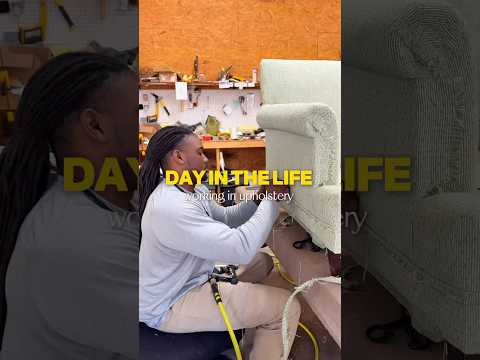
A job usually starts with a work order and some measuring: figuring out exactly how much new fabric and padding a piece needs before stripping the old covering and rebuilding the frame with foam or fiber stuffing underneath. From there, upholsterers cut and sew new material to pattern, securing it with hand tools, staples, or adhesive, and often hand-sew tufting or repair torn seams as standalone jobs rather than full re-covers. The work is done piece by piece rather than on an assembly line, which makes it more craft than production work, and most upholsterers operate out of small furniture-repair shops, auto interior specialties, or as independent contractors serving both homeowners and businesses.
Pros
- Hands-on craft trade repairing and building furniture and vehicle upholstery, with visible finished work
- Relatively stable field, only a mild 1.8% projected decline compared to steeper drops elsewhere in production
- Low barrier to entry with just a HS diploma and on-the-job training
Cons
- Small, geographically limited job market of about 2,200 positions nationwide
- Pay ceiling under $64k limits long-term earning growth
- Physically demanding, on-your-feet work handling padding, springs, and cutting tools all day
A typical day
The morning starts with a stripped-down wingback chair -- yesterday's teardown revealed a cracked frame rail, glued and clamped overnight, now solid. New webbing and springs go in first, eight-way hand-tied the way the trade's best work has always been done. The afternoon is fabric: measuring and cutting a client's expensive yardage so the pattern matches at every seam, then the slow, satisfying staple-and-fold rhythm of covering curves without a pucker. The day ends fitting the cushion and photographing the finished piece, because a portfolio of before-and-afters is an upholsterer's best advertising.
Tasks at the job
- Fit, install, and secure material on frames, using hand tools, power tools, glue, cement, or staples.
- Build furniture up with loose fiber stuffing, cotton, felt, or foam padding to form smooth, rounded surfaces.
- Measure and cut new covering materials, using patterns and measuring and cutting instruments, following sketches and design specifications.
- Read work orders, and apply knowledge and experience with materials to determine types and amounts of materials required to cover workpieces.
- Adjust or replace webbing, padding, or springs, and secure them in place.
- Sew rips or tears in material, or create tufting, using needles and thread.
Workplace & working conditions
Work happens indoors in a climate-controlled setting, and most of the day is spent on your feet. The role involves regular exposure to contaminants, and standard protective equipment (gloves, safety glasses, and similar) is expected.
There's a regular, moderate amount of time pressure. Precision and accuracy are essential to the work.
Education necessary or common
High school diploma; some on-the-job training or apprenticeship
Career path
Related fields
Courses to take
- Sewing/fashion or family & consumer sciences -- fabric skills at the core
- Shop or woodworking -- frames need repair and understanding
- Geometry -- pattern layout and yardage math
- Art -- color, texture, and proportion judgment
- Business math -- most upholsterers price their own work
Clubs, activities & competitions
- Reupholster a thrift-store chair as a project
- FCCLA or 4-H sewing programs
- Theater set and prop construction
- Woodworking club
First steps you can take now
- Redo a simple dining-chair seat -- the classic first project, done in an afternoon
- Watch a full teardown-to-finish reupholstery series
- Learn to sew straight, strong seams on a machine
- Visit an upholstery shop and ask about helper work