Photo: Jorge Royan (CC BY-SA 3.0)
Job description
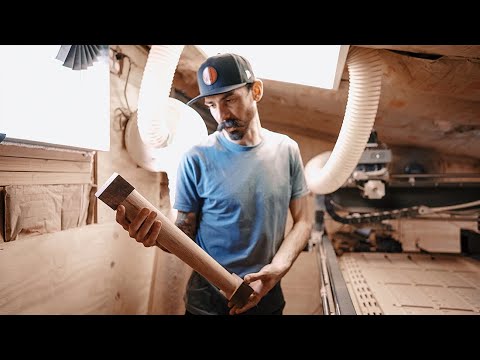
A typical job starts from a blueprint or drawing: measuring and marking lumber before cutting, shaping, and sanding it on power saws, jointers, and mortisers, then assembling the pieces with glue, dowels, or fasteners and adding hardware like hinges and handles. Most of the shift is spent on your feet in a shop that isn't always climate-controlled, working around noise and machinery that call for standard protective gear. Cabinetmakers often progress from producing standard pieces to custom, high-grade furniture or store fixtures as their skills and reputation grow, and some eventually open their own small shop.
Pros
- Low barrier to entry, high school diploma plus on-the-job training or apprenticeship
- Hands-on craft work producing tangible, finished pieces like cabinets and furniture
- Sizable occupation nationally (8,100 jobs) despite being a specialized trade
Cons
- Employment projected to shrink over the next decade (-1.6%)
- Pay tops out under $64k, a modest ceiling for physically demanding work
- Regular exposure to noise, hazardous equipment, and other physical hazards on the job
A typical day
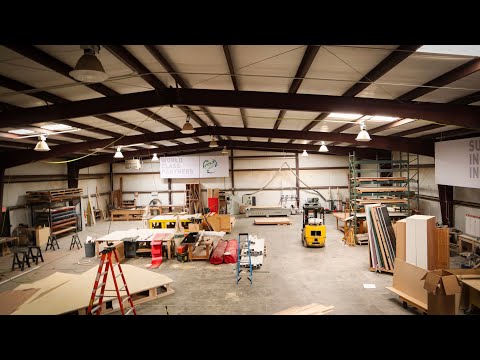
The cut list rules the morning: a kitchen's worth of cabinet boxes broken out of prefinished plywood on the table saw or the CNC — the modern shop uses both — every panel labeled, edges banded, and stacked in assembly order. The bench hours that follow are the craft's heart: face frames joined square, drawer boxes dovetailed or doweled, doors fitted to reveal gaps a credit card thickness wide, because the eye reads an eighth-inch error from across a room. After lunch the finish room takes over — stain sprayed even, topcoats laid dust-free — and then a custom piece for a client gets its walnut top flattened by hand plane, shavings curling in the shop's best smell. Delivery day, later this week, is the payoff: boxes becoming someone's kitchen, level and true against walls that never are.
Tasks at the job
- Produce or assemble components of articles, such as store fixtures, office equipment, cabinets, or high-grade furniture.
- Measure and mark dimensions of parts on paper or lumber stock prior to cutting, following blueprints, to ensure a tight fit and quality product.
- Set up or operate machines, including power saws, jointers, mortisers, tenoners, molders, or shapers, to cut, mold, or shape woodstock or wood substitutes.
- Establish the specifications of articles to be constructed or repaired, or plan the methods or operations for shaping or assembling parts, based on blueprints, drawings, diagrams, or oral or written instructions.
- Attach parts or subassemblies together to form completed units, using glue, dowels, nails, screws, or clamps.
- Install hardware, such as hinges, handles, catches, or drawer pulls, using hand tools.
Workplace & working conditions
Work happens indoors, though not always in a climate-controlled space, and most of the day is spent on your feet. Noise levels can be distracting or uncomfortable. The role involves regular exposure to hazardous equipment or conditions and contaminants, and standard protective equipment (gloves, safety glasses, and similar) is expected.
The pace is often fast, with real time pressure to meet deadlines.
Education necessary or common
High school diploma; some on-the-job training or apprenticeship
Licenses & certifications
- OSHA 10
- AWI (Architectural Woodwork Institute) skill standards (industry benchmark)
- Cabinetmaking apprenticeship or career-center certificate
Career path
Related fields
Courses to take
- Woodshop — every level offered, the direct pipeline
- Geometry — the trade's daily math of angles, squares, and layout
- Drafting/CAD — modern shops draw before they cut
- Algebra — cut-list and materials math
- Art — proportion and finish sense
Clubs, activities & competitions
- SkillsUSA cabinetmaking competitions — a genuine national contest for this trade
- Theater set construction
- Build and sell small pieces — cutting boards to bookshelves
- Habitat for Humanity
First steps you can take now
- Build one project this month with joinery beyond screws — a box with dadoes or dovetails — and finish it properly
- Learn to sharpen a chisel and plane iron; sharp tools teach faster than dull ones
- Ask a local cabinet shop about after-school or summer helper work
- Design a project in free CAD (SketchUp) with a real cut list before touching wood