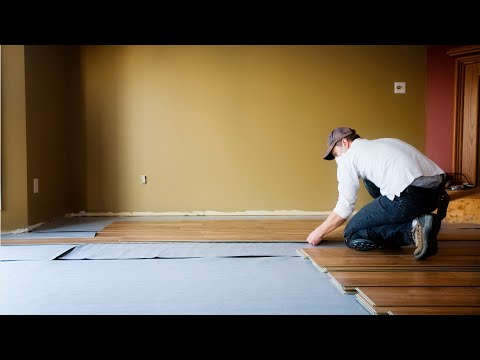
Photo: Donald Trung Quoc Don (Chữ Hán: 徵國單) - Wikimedia Commons - © CC BY-SA 4.0 Intern (CC BY-SA 4.0)
Job description
Installers begin by measuring rooms and calculating material needs, then prepare subfloor surfaces before cutting and fitting flooring to precise room dimensions. They secure the material with adhesives, nails, or fasteners depending on what's being installed, and finish by sealing, grouting, or otherwise treating the completed surface. It's physically demanding work spent kneeling and bending close to the floor, and skilled installers often become self-employed contractors since demand is steady enough to support running a small crew of their own.
Pros
- Clear path to self-employment, running your own crew once skilled
- No formal degree required, learned through on-the-job training or apprenticeship
- Standard, manageable hours (40-45/week) compared to many skilled trades
Cons
- Physically demanding work with frequent kneeling and bending close to the floor
- Regular exposure to dust and adhesive fumes on the job
- Visible mistakes like gaps or uneven seams are hard to hide, so precision is unforgiving
A typical day
The install starts with demolition and truth: old carpet out by 8:30, and the subfloor underneath decides the day — this one needs two sheets of underlayment replaced and a squeak screwed down before anything new goes in. The morning is prep and layout, snapping lines so the tile courses land balanced at the doorways. The afternoon is production: cuts measured twice at the saw, rows clicking or setting into place, the tricky vent and jamb cuts saved for full concentration. The last hour is transitions, trim, and the walk-through with the homeowner — the moment the room looks finished is why installers love this trade.
Tasks at the job
- Measure rooms and prepare subfloor surfaces for installation.
- Cut and fit flooring materials such as tile, hardwood, vinyl, or carpet to room dimensions.
- Install underlayment and secure flooring with adhesives, nails, or fasteners.
- Seal, finish, or grout completed flooring as the material requires.
- Remove and dispose of old flooring before installing new material.
- Inspect finished work for gaps, unevenness, or other defects.
Workplace & working conditions
Work happens indoors at clients' homes or businesses, with frequent kneeling and bending close to the floor, and some exposure to dust or adhesive fumes.
The work is physically demanding, and precision is essential since visible seams or gaps are hard to hide. Installers often work independently or in small crews, with pace set by job scheduling rather than constant supervision.
Education necessary or common
No formal degree required; learned through on-the-job training or a trade apprenticeship
Licenses & certifications
- CFI (Certified Flooring Installers) credentials
- NWFA certifications for hardwood
- Tile Council of North America training for tile work
- OSHA 10
Career path
Related fields
Courses to take
- Geometry — every room is a layout problem
- Construction/Carpentry shop — subfloor work is carpentry
- Algebra — material estimates and cut lists
- Business Math — most installers price their own jobs eventually
- Drafting — reading plans on commercial work
Clubs, activities & competitions
- SkillsUSA carpentry or masonry events
- Habitat for Humanity builds
- Summer work with a flooring or remodeling contractor
- A DIY project documented start to finish
First steps you can take now
- Install click-lock flooring in one real room — rentable tools, learnable in a weekend
- Get a laborer job with a flooring crew at 16-18
- Learn to read a tape measure to 1/16 inch fast and cut a straight line
- Price a room: measure, calculate waste, and quote it like a pro