Photo: Courtesy photo by Molly Lynn Westrate (Public domain)
Job description
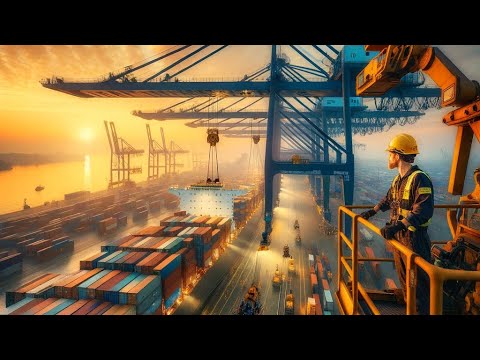
Longshoremen operate cranes, forklifts, and other heavy equipment to move shipping containers and cargo on and off vessels, securing loads for safe transport and inspecting cargo and equipment for damage along the way. They coordinate closely with ship crews and dock supervisors to sequence loading operations, all while following strict safety protocols around suspended loads and constant machinery traffic. It's a highly unionized field with strong pay and benefits relative to the education required (entry is typically through a union hiring hall), though shifts run on ship schedules, which often means irregular hours including nights and weekends.
Pros
- Strong pay up to $130k with no formal degree required
- Highly unionized industry with strong benefits relative to education needed
- Hands-on work operating heavy equipment like cranes and forklifts
Cons
- Entry is often through a union hiring hall with a waiting list
- Irregular hours dictated by ship schedules, including nights and weekends
- Physically demanding work amid heavy machinery, suspended loads, and shifting cargo
A typical day
The hiring hall dispatch sets the day — today it's a container ship at berth 7, and the gang takes positions by seniority and skill: lashers on deck breaking down the rods and turnbuckles that held boxes through Pacific swells, a crane operator in the cab ninety feet up moving forty-ton containers with surgical smoothness at a rhythm of thirty an hour. This member's assignment is driving a UTR — the yard tractor shuttling containers between crane and stacks in a choreography where everyone knows exactly where everyone else is, because the machinery forgives nothing. Breaks run by the contract, safety rules by the book the union wrote in blood over decades. The afternoon flips to loading: export boxes sequenced by the ship's stow plan, heaviest low, refrigerated units wired and verified. When the last lash goes on, the ship sails within the hour. The work is generational, the union hall is its own culture, and the pay at full registration is the waterfront's well-kept secret.
Tasks at the job
- Operate cranes, forklifts, and other heavy equipment to load and unload cargo from ships.
- Secure containers, pallets, and bulk cargo for safe transport and storage.
- Inspect cargo and equipment for damage before and after loading.
- Coordinate with ship crews and dock supervisors to sequence loading and unloading operations.
- Follow safety protocols around heavy machinery, suspended loads, and vessel movement.
Workplace & working conditions
Work happens outdoors on busy shipping docks and aboard vessels, in all weather conditions, amid heavy machinery, shifting cargo, and constant vehicle and crane traffic.
The work is physically demanding and follows strict safety procedures given the serious hazards of heavy equipment and suspended loads. Shifts often run around ship schedules, which can mean irregular hours, including nights and weekends when vessels arrive.
Education necessary or common
No formal degree required; entry is typically through a union hiring hall, often with a waiting list
Licenses & certifications
- TWIC card (Transportation Worker Identification Credential) — required for port access
- Forklift and equipment certifications
- Crane operator certification (the waterfront's top-paying skill, earned through union training)
Career path
Related fields
Courses to take
- Physical Education — the work demands strength and stamina
- Shop/Mechanical — equipment operation and rigging sense
- Geometry — container stowage and clearances are spatial work
- Driver's Education — clean record for equipment operation
- Economics — global trade is the industry's tide
Clubs, activities & competitions
- Team sports — crew coordination and toughness
- Part-time warehouse or dock work — material handling basics
- SkillsUSA — heavy equipment exposure
- Boating or maritime hobbies — waterfront familiarity
First steps you can take now
- Learn how port hiring actually works: ILWU (West Coast) and ILA (East/Gulf) halls register workers, often via lottery or lists — research your port's process early because waits are long
- Get material handling experience: warehouse, forklift, freight jobs all count
- Visit a port observation area and watch container operations — the scale resets your sense of the economy
- Keep a clean record and get fit — casual (entry) work goes to those ready when called