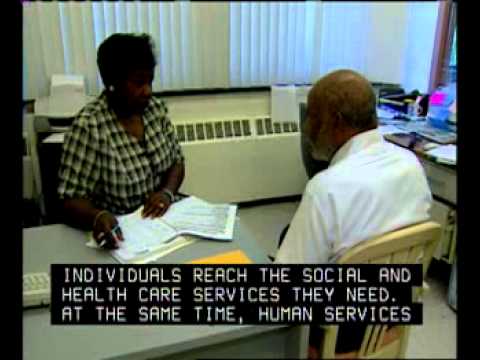
Photo: USDAgov (Public domain)
Job description
An assistant might visit a client's home or attend group meetings to explain what services an agency offers, interview individuals or families to gather background on their situation, and help them navigate things like food stamps, child care, or housing assistance. They also assess clients' cognitive and emotional needs, help develop and carry out behavioral management or care plans, and keep detailed records of every visit. The role spans fields from psychology to rehabilitation to substance abuse support, and involves a fast pace and regular contact with people going through difficult circumstances.
Pros
- Faster than average projected growth (6.4%) with a large 50,600-job pool
- Direct, tangible impact helping clients navigate real personal crises
- Strong team-based structure with built-in support from other providers
Cons
- Pay tops out modestly at $63k despite requiring a bachelor's degree
- Regularly deals with frustrated or upset clients as part of the job
- Fast pace with real deadline pressure in a noisy, distracting work environment
A typical day
The community action office opens at 8:30, and the assistant's first client is a mother navigating the utility-assistance application — the assistant walks her through documents, catches a missing form that would have cost weeks, and schedules the follow-up. The morning is a stream of such navigation: a benefits eligibility screening, a bus-pass voucher, a referral to the food pantry with a call ahead so the client arrives expected. After lunch the assistant makes home visits with a caseworker, updating service plans and noticing what the file can't — an empty fridge, a proud client who won't ask twice. Back at the desk, documentation ties the day together, because the records unlock the resources. The work is the safety net's human stitching.
Tasks at the job
- Assess clients' cognitive abilities and physical and emotional needs to determine appropriate interventions.
- Develop and implement behavioral management and care plans for clients.
- Visit individuals in homes or attend group meetings to provide information on agency services, requirements, or procedures.
- Keep records or prepare reports for owner or management concerning visits with clients.
- Interview individuals or family members to compile information on social, educational, criminal, institutional, or drug history.
- Advise clients regarding food stamps, child care, food, money management, sanitation, or housekeeping.
Workplace & working conditions
Work happens indoors in a climate-controlled setting. Noise levels can be distracting or uncomfortable.
The pace is often fast, with real time pressure to meet deadlines. You'll regularly deal with frustrated or upset people as part of the job, and almost all of the work is done as part of a team.
Education necessary or common
Bachelor's degree
Common college majors
Licenses & certifications
- HS-BCP (Human Services Board Certified Practitioner, later)
- CPR/First Aid
- State-specific case aide certifications
Career path
Related fields
Courses to take
- Psychology/AP Psychology — foundations for the helping professions
- Sociology — poverty and systems context
- English — documentation and client communication
- Spanish or another community language — doubles who you can serve
- Health — community wellness basics
Clubs, activities & competitions
- Key Club — service hours with structure
- Volunteer at a food bank, shelter, or community center regularly
- Peer counseling or peer mediation
- Big Brothers Big Sisters or tutoring programs
First steps you can take now
- Volunteer weekly at one human-services organization this semester
- Learn your county's actual resource map: food, housing, health, transit assistance
- Get trained in Mental Health First Aid
- Interview a caseworker about a typical caseload