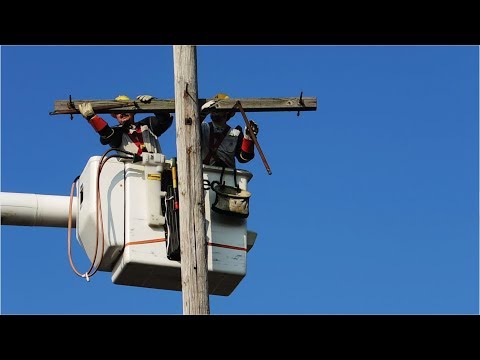
Photo: FBenjr123 (CC BY-SA 4.0)
Job description
The job moves between very different settings in a single day: climbing poles or riding bucket trucks to string aerial line, then crawling into manholes, tunnels, or trenches to run underground cable, testing signal strength at each stage with electronic equipment. Installers also handle the customer-facing side of the work, setting up, connecting, and testing service directly in homes and businesses. As copper networks get phased out, more of the job is shifting toward fiber optic installation and splicing, a specialty technicians can build added certification around.
Pros
- Strong pay ceiling near $104k reachable with just a high school diploma and apprenticeship
- Varied physical work moving between poles, trenches, tunnels, and customer sites
- Direct, tangible impact getting customers' internet and phone service running
Cons
- Employment projected to shrink by 3.1% over the next decade
- Regular exposure to heights, tight spaces like manholes, and outdoor weather
- Fast-paced work with frequent frustrated customers waiting on service
A typical day
The crew brief at 7am covers today's route: pulling new fiber along two miles of pole line, with traffic control set up before the first bucket goes up. The morning is aerial work -- lashing cable, setting anchors, and keeping clearances from power lines that are always treated as live. A locate ticket after lunch shifts the crew underground, feeding cable through conduit and into a vault where a splicer marries hundreds of strands. Storm season looms over everything: when lines go down, this crew becomes the reason a town gets its internet back.
Tasks at the job
- Measure signal strength at utility poles, using electronic test equipment.
- Access specific areas to string lines, or install terminal boxes, auxiliary equipment, or appliances, using bucket trucks, climbing poles or ladders, or entering tunnels, trenches, or crawl spaces.
- Clean or maintain tools or test equipment.
- Pull cable through ducts by hand or with winches.
- Dig trenches for underground wires or cables.
- Set up service for customers, installing, connecting, testing, or adjusting equipment.
Workplace & working conditions
Work happens primarily outdoors, exposed to whatever the weather is doing, and most of the day is spent on your feet. Noise levels can be distracting or uncomfortable. The role involves regular exposure to hazardous equipment or conditions and contaminants and working at heights, and specialized protective equipment is standard.
The pace is often fast, with real time pressure to meet deadlines, and you're expected to exercise significant independent judgment day to day. Precision and accuracy are essential to the work. You'll regularly deal with frustrated or upset people as part of the job.
Education necessary or common
High school diploma; some on-the-job training or apprenticeship
Licenses & certifications
- Class A/B CDL (often required)
- OSHA 10
- FOA fiber certifications
Career path
Related fields
Courses to take
- Physical education -- climbing and outdoor work take real fitness
- Physics -- tension, clearances, and electrical safety
- Shop classes -- rigging, tools, and equipment
- Algebra -- spans, sags, and footage math
- Driver's education -- a clean license leads toward the CDL
Clubs, activities & competitions
- SkillsUSA -- trade competitions and safety culture
- Outdoor work -- landscaping or farm jobs build the right base
- Amateur radio or electronics tinkering
- Rock climbing -- comfort with heights and harnesses
First steps you can take now
- Take the free OSHA 10 construction course
- Look up line-worker and telecom apprenticeships (carriers and contractors both hire trainees)
- Get comfortable working at height safely through a climbing gym
- Keep a spotless driving record -- a CDL is often part of the job