Photo: 176th Wing Alaska Air National Guard from Anchorage, Alaska, United States (CC BY 2.0)
Job description
Administrative duties include greeting and checking in patients, scheduling appointments, and handling billing and insurance coding, while clinical duties cover taking vital signs, recording medical histories, prepping patients for exams, and running basic diagnostic equipment like x-ray or EKG machines. Assistants also explain treatment instructions to patients, sterilize instruments between uses, and administer medications as directed by the physician. It's close, people-facing work with a moderate but constant pace, and it's one of the more accessible entry points into a clinical healthcare career, needing vocational training or an associate's degree rather than a four-year degree.
Pros
- Much faster than average projected growth (12.5%) with over 112,000 positions nationwide
- Accessible entry point, vocational training or an associate's degree, no four-year degree needed
- Varied role blending clinical tasks (vitals, EKGs) with administrative work, broad healthcare exposure
Cons
- Pay ceiling is modest ($36k-$59k) despite handling tasks where mistakes carry real consequences
- Mistakes can have serious consequences, so accuracy matters under regular time pressure
- Constant close contact with patients, including frustrated or upset ones, all shift long
A typical day
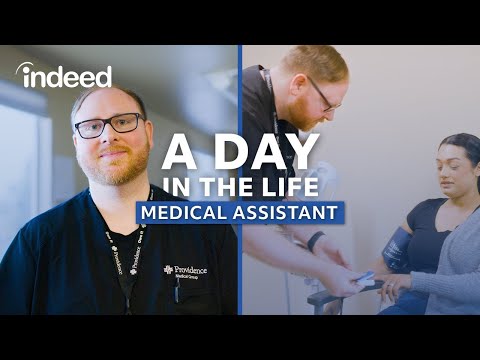
Clinic doors open at 8am, and the first hour is rooming patients back-to-back: weight, blood pressure, temperature, and a quick history typed into the chart before the provider walks in. Mid-morning brings a blood draw, two injections, and an EKG, each with its own careful double-check of patient and order. Lunch gets shortened by a prior-authorization call to an insurance company. The afternoon mixes front-office work — scheduling, refill requests, patient portal messages — with more clinical tasks, and the day ends restocking exam rooms and confirming tomorrow's appointments.
Tasks at the job
- Explain treatment procedures, medications, diets, or physicians' instructions to patients.
- Show patients to examination rooms and prepare them for the physician.
- Greet and log in patients arriving at office or clinic.
- Operate x-ray, electrocardiogram (EKG), or other equipment to administer routine diagnostic tests.
- Interview patients to obtain medical information and measure their vital signs, weight, and height.
- Clean and sterilize instruments and dispose of contaminated supplies.
Workplace & working conditions
Work happens indoors in a climate-controlled setting, and you work in close physical proximity to coworkers or the public for much of the shift. Standard safety equipment like gloves or safety glasses is commonly worn.
There's a regular, moderate amount of time pressure. Mistakes can have serious consequences, so accuracy matters a lot. You'll regularly deal with frustrated or upset people as part of the job, and almost all of the work is done as part of a team.
Education necessary or common
Vocational training, apprenticeship, or associate's degree
Licenses & certifications
- Certified Clinical Medical Assistant (CCMA) or Certified Medical Assistant (CMA, AAMA)
- CPR/BLS certification
- Phlebotomy certification (adds value in many clinics)
Career path
Related fields
Courses to take
- Anatomy and Physiology — the foundation for every vital sign and procedure
- Health Science or Medical Careers CTE track — many include clinical skills and sometimes CCMA prep
- AP Biology — body systems and disease processes
- Medical Terminology (often within health science electives) — the language of every chart note
- Spanish — bilingual medical assistants are in high demand in most clinics
Clubs, activities & competitions
- HOSA-Future Health Professionals — Medical Assisting is a direct competitive event
- Volunteer at a clinic, hospital, or nursing home for patient-facing experience
- Red Cross club — first aid and CPR training plus service hours
- Part-time job at a pharmacy or medical office front desk
First steps you can take now
- Get CPR/BLS certified this month — it's required for the job and available through the Red Cross or AHA
- Ask your counselor whether your district has a health science CTE program with clinical rotations
- Shadow a medical assistant at a family practice for a morning
- Compare accredited MA certificate programs near you — many take under a year after graduation