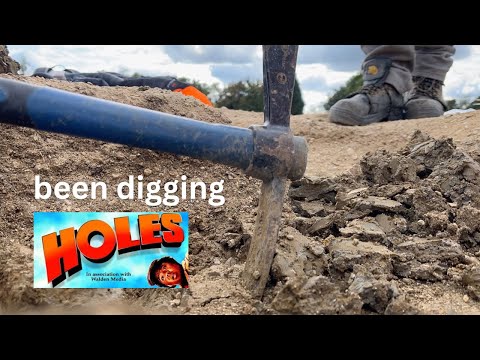
Photo: Dougald O'Reilly (CC BY-SA 4.0)
Job description
Fieldwork involves systematically surveying and digging a site, then carefully recording everything found through notes, photographs, and stratigraphic drawings before it's disturbed further. Back in the lab, artifacts get cleaned, catalogued, and analyzed, which then feeds into reports and academic papers interpreting what the findings mean in historical or cultural context. Academic and museum jobs are competitive, so a large share of practicing archaeologists actually work in cultural resource management, surveying land ahead of construction projects to check for historically significant sites. Digs can be remote and physically demanding for weeks at a stretch, requiring patience since a season of digging sometimes turns up very little.
Pros
- Hands-on fieldwork uncovering and interpreting real physical history
- Variety between rugged outdoor excavation and detailed indoor lab analysis
- Field technician work is accessible with just a bachelor's degree
Cons
- Academic and museum positions are highly competitive with limited openings
- Fieldwork means weeks of physically demanding outdoor exposure to weather
- Grant and permit funding must be secured project by project, adding uncertainty
A typical day
On survey, the day is miles: walking transects across a proposed solar-farm site in a line with three colleagues, eyes down, flagging every lithic flake and historic can scatter, digging shovel test pits at intervals and screening the soil. Finds get GPS points, photographs, and bags with meticulous labels. During excavation phases the pace slows to trowel speed — a hearth feature emerging over two careful days. Lab seasons swap boots for catalogs: washing, sorting, and analyzing artifacts, then writing the report that satisfies federal preservation law. Most working archaeologists live in this compliance world, where science, deadlines, and construction schedules negotiate constantly.
Tasks at the job
- Survey and excavate sites using systematic digging, mapping, and artifact recovery techniques.
- Record findings through detailed notes, photographs, and stratigraphic drawings.
- Clean, catalog, and analyze artifacts in a lab following fieldwork.
- Write reports and academic papers interpreting findings within historical or cultural context.
- Apply for permits, grants, and funding to support excavation projects.
- Collaborate with historians, geologists, and other specialists to interpret a site's context.
Workplace & working conditions
Fieldwork happens outdoors at dig sites, which can be remote, physically rugged, and exposed to weather for weeks or months at a stretch, while lab analysis happens indoors afterward.
Excavation is slow, meticulous, and physically demanding work performed in the sun or cold, requiring patience since a season's dig may turn up little, punctuated later by intense concentration during delicate artifact handling.
Education necessary or common
Master's or PhD in archaeology or anthropology for research and academic roles; a bachelor's can lead to field technician work
Common college majors
Licenses & certifications
- Field school completion (the entry credential for crew work)
- RPA registration (graduate-level, later)
Career path
Related fields
Courses to take
- AP World History and AP U.S. History — the record you'll be reading from the ground
- AP Biology — human remains and environmental data
- AP Statistics — sampling and analysis
- Geometry — mapping and stratigraphy are spatial
- A world language — many field opportunities are abroad
Clubs, activities & competitions
- History club or archaeology club
- Museum collections volunteering
- Science Olympiad
- Scouting/Outdoors club — field stamina and camping competence genuinely matter
First steps you can take now
- Attend a public dig day through your state archaeological society
- Learn to use a compass and read a topographic map properly
- Catalog a small collection (family photos, coins, anything) with a real numbering system — curation is half the discipline
- Look up field schools that accept students the summer after senior year