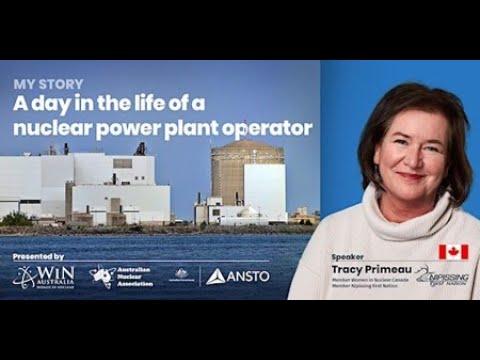
Photo: Vsatinet (CC BY-SA 4.0)
Job description
Most of the shift happens in a tightly controlled control room, watching instruments that track reactor temperature, pressure, and radiation levels, and logging readings during routine equipment checks. When an alarm sounds or something looks abnormal, operators follow detailed emergency procedures rather than improvising, and they coordinate closely with engineering and safety staff during planned maintenance outages or plant startups. Because the reactor runs continuously, shifts rotate around the clock, and operators train constantly on simulators so emergency responses become second nature. It's one of the most rigorously trained and licensed operator roles in any industry, requiring an associate's or bachelor's degree in a technical field plus extensive plant-specific training and an NRC operator license, with pay typically between $70,000 and $130,000.
Pros
- Strong pay from entry level, reaching up to $130k
- Rigorous training and licensing process leads to a highly specialized, stable role
- Work happens in a controlled, climate-controlled environment for most of the shift
Cons
- Requires extensive plant-specific training and an NRC operator license before starting
- Shifts rotate around the clock since the reactor runs continuously
- Demands sustained vigilance and zero tolerance for improvisation, even during uneventful shifts
A typical day
Shift turnover at 6am is a formal briefing, not a hallway chat: plant status, equipment out of service, and evolutions planned for the next twelve hours, all acknowledged before responsibility transfers. The morning in the control room is disciplined monitoring — scanning panels, logging parameters, and executing a scheduled pump swap using a procedure followed step by step with a second operator peer-checking each action, because in this control room nobody trusts memory. A monthly surveillance test on an emergency system runs after lunch, timed and documented against technical specifications. Simulator training fills two afternoon hours: today's scenario is a steam generator tube leak, drilled until the crew's response is calm and automatic. The shift ends the way it began — a formal turnover, every detail passed to the next crew.
Tasks at the job
- Monitor control room instruments tracking reactor temperature, pressure, and radiation levels.
- Adjust plant systems to maintain safe and efficient power generation.
- Respond to alarms or abnormal readings by following detailed emergency operating procedures.
- Conduct routine equipment checks and log readings throughout each shift.
- Coordinate with engineering and safety staff during maintenance outages or plant startups.
Workplace & working conditions
Work happens mostly in a highly controlled, climate-controlled control room, with periodic rounds through parts of the plant that involve radiation monitoring badges and controlled-access areas.
The work is extremely procedure-driven, with essentially zero tolerance for improvisation given the safety stakes, and operators train constantly on simulators for emergency scenarios. Shifts rotate around the clock since the reactor runs continuously, and sustained vigilance is required even during uneventful shifts.
Education necessary or common
Associate's or bachelor's degree in a technical field, plus extensive plant-specific training and an NRC operator license
Common college majors
Licenses & certifications
- NRC Reactor Operator (RO) license
- NRC Senior Reactor Operator (SRO) license (career step)
Career path
Related fields
Courses to take
- AP Physics — thermodynamics, fluids, and reactor principles
- AP Chemistry — water chemistry and materials in the plant
- Algebra II and Precalculus — the entrance exams and training math
- Electronics or Engineering CTE courses — systems and instrumentation sense
- AP English Language and Composition — procedures and logs demand precise reading and writing
Clubs, activities & competitions
- Science Bowl — the Department of Energy's competition
- JROTC or Civil Air Patrol — procedural discipline and watch-standing culture
- FIRST Robotics — complex systems teamwork
- A job or role with real checklists: lifeguarding, aviation ground school
First steps you can take now
- Research the two main entry routes: Navy nuclear program or a utility's non-licensed operator pipeline from a technical degree
- Take a plant tour or virtual control-room tour
- Practice procedural discipline this month: execute one complex task from a written checklist without deviation, then improve the checklist
- Look up what NRC licensing requires — the multi-year training investment explains the pay