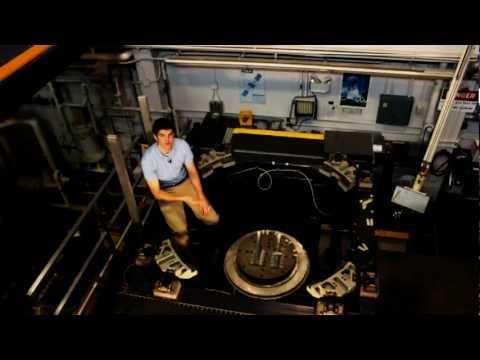
Photo: NASA Goddard Space Flight Center / Michael Guinto (Public domain)
Job description
Turning an idea into a flying vehicle starts with formulating a conceptual design that meets customer requirements and environmental regulations, then running experimental, environmental, and stress tests on models or prototypes to see how the design actually holds up. Engineers also investigate and resolve technical problems reported from the field, evaluate data against engineering and quality standards, and write technical reports for other engineers, management, or customers. It's largely desk-based, team-oriented work with a steady, moderate level of deadline pressure rather than constant crisis mode.
Pros
- High upside earning potential, up to $206k, with strong pay even at entry level
- Faster than average projected growth (6.1%)
- Work on cutting-edge aircraft, missile, and spacecraft technology with real-world testing
Cons
- Above-average hours, expect more than a standard 40-hour work week
- Small errors in design or testing can carry serious safety and cost consequences
- Heavily team-based work requiring coordination across engineering disciplines
A typical day
The morning might be spent in simulation — running computational fluid dynamics on a redesigned engine inlet and comparing results against last week's wind-tunnel data that didn't quite match prediction. At 11 there's a design review where a stress engineer challenges a bracket's margin, and the disagreement is settled with analysis, not seniority. Afternoons mix CAD refinement, a supplier call about a titanium part's tolerances, and documentation — aerospace runs on verification records. Some days end at a test stand watching hardware either confirm months of analysis or send everyone back to the model.
Tasks at the job
- Plan or conduct experimental, environmental, operational, or stress tests on models or prototypes of aircraft or aerospace systems or equipment.
- Formulate conceptual design of aeronautical or aerospace products or systems to meet customer requirements or conform to environmental regulations.
- Plan or coordinate investigation and resolution of customers' reports of technical problems with aircraft or aerospace vehicles.
- Write technical reports or other documentation, such as handbooks or bulletins, for use by engineering staff, management, or customers.
- Evaluate product data or design from inspections or reports for conformance to engineering principles, customer requirements, environmental regulations, or quality standards.
- Analyze project requests, proposals, or engineering data to determine feasibility, productibility, cost, or production time of aerospace or aeronautical products.
Workplace & working conditions
Work happens indoors in a climate-controlled setting, and most of the day is spent sitting at a desk.
There's a regular, moderate amount of time pressure, and you're expected to exercise significant independent judgment day to day. Almost all of the work is done as part of a team.
Education necessary or common
Bachelor's degree
Common college majors
Licenses & certifications
- FE/PE license (valuable in some aerospace sectors, not all)
Career path
Related fields
Courses to take
- AP Physics C — the closest high school gets to real engineering mechanics
- AP Calculus BC — non-negotiable foundation
- AP Computer Science A — modern aerospace engineers code daily
- AP Chemistry — materials and propulsion chemistry
- Engineering/PLTW Aerospace Engineering if offered
Clubs, activities & competitions
- The American Rocketry Challenge (TARC) — a national flight competition for exactly this interest
- FIRST Robotics
- Civil Air Patrol cadet program
- Science Olympiad (Flight and engineering-build events)
- Math team
First steps you can take now
- Build something that flies this month — a TARC-spec rocket or a balsa glider you iterate on three times
- Install a free flight simulator or OpenRocket and learn what stability margin means
- Watch a launch webcast with the technical commentary and look up every term you don't know
- Find the nearest university with an AIAA student branch and attend a public talk