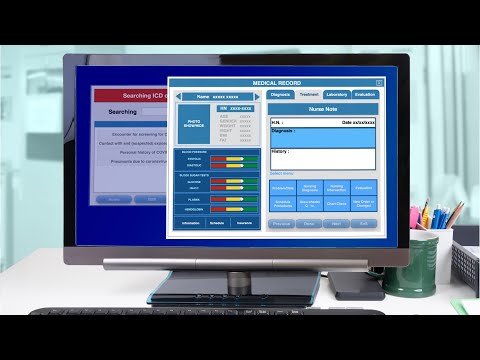
Photo: U.S. Navy photo by Rod Duren (Public domain)
Job description
The job centers on organizing and auditing patient records: assigning standardized codes to diagnoses and procedures, catching and correcting discrepancies, and making sure records meet legal and accreditation requirements. Technologists work mostly with the records systems themselves rather than treating patients directly, and much of the workload follows billing cycles rather than clinical emergencies, so the pace tends to stay steady. Because patient privacy law carries real legal weight, accuracy and confidentiality aren't optional extras, they're central to the job.
Pros
- Much faster than average projected job growth (14.7% over the next decade)
- Only vocational training, an apprenticeship, or an associate's degree required to enter
- Pay can reach $117k without needing a four-year degree
Cons
- Above-average hours -- expect more than a standard 40-hour work week
- Detail-intensive work governed by strict privacy regulations carries real legal weight
- Work is primarily screen-based, with limited direct patient interaction
A typical day
The queue is already full at 8am: yesterday's discharge charts need coding before the billing deadline. The technologist reads through a surgical record, assigning precise ICD-10 and CPT codes — the difference between two similar codes can be thousands of dollars and a compliance headache, so accuracy beats speed. Late morning brings a physician query: a diagnosis note is ambiguous, and it's the tech's job to request clarification without leading the answer. The afternoon shifts to registry work, abstracting data from cancer cases into the state registry with every field validated. The day ends clearing release-of-information requests, checking each one against privacy rules before a single page leaves the system.
Tasks at the job
- Organize and maintain patient health records, ensuring accuracy, completeness, and confidentiality.
- Assign standardized medical codes to diagnoses and procedures for billing and records purposes.
- Ensure health records comply with legal, regulatory, and accreditation requirements.
- Manage electronic health record systems, including data entry, retrieval, and troubleshooting.
- Audit records for accuracy and completeness, correcting discrepancies as needed.
- Release patient information to authorized parties in compliance with privacy laws.
Workplace & working conditions
Work is office-based, typically within a hospital, clinic, or insurance company, working primarily with electronic records systems rather than patients directly.
The work is detail-intensive and governed by strict privacy regulations, so accuracy and confidentiality carry real legal weight. The pace is generally steady, driven by billing cycles and records volume rather than clinical emergencies.
Education necessary or common
Vocational training, apprenticeship, or associate's degree
Licenses & certifications
- RHIT (Registered Health Information Technician) — the field's core credential, via an accredited associate's program
- CCS or CCA (AHIMA coding credentials)
- CPC (AAPC Certified Professional Coder)
- CTR (Certified Tumor Registrar) for the registry path
Career path
Related fields
Courses to take
- Anatomy and Physiology — coding is impossible without knowing the body
- Health Science or Medical Terminology electives — the daily vocabulary of the job
- Computer Applications — you live in electronic record systems and spreadsheets
- Biology — disease processes underpin every diagnosis code
- Business or Accounting — billing and reimbursement context
Clubs, activities & competitions
- HOSA — medical terminology and health career events
- Volunteer at a hospital information desk or medical records department
- Part-time office or data-entry job — accuracy under volume is the core skill
- DECA or FBLA — the business-of-healthcare side
First steps you can take now
- Take a free medical terminology course online — it's the gateway skill
- Look up an accredited Health Information Technology associate's program at a community college near you
- Ask a clinic office manager to show you (with no patient data) how records and billing flow
- Practice ten ICD-10 code lookups using the free online code browser to see how coding logic works