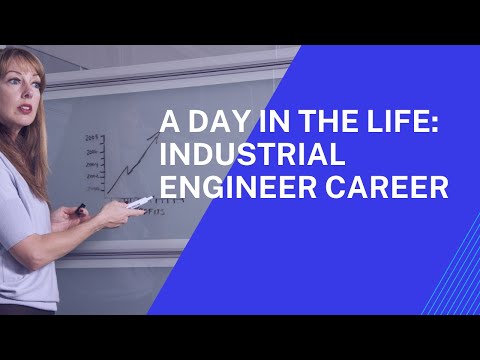
Photo: Tianlan Intelligent (CC BY-SA 4.0)
Job description
On a given day, an industrial engineer might analyze cost and quality data to spot inefficiencies, meet with vendors and management to align on production or design changes, and evaluate testing equipment or engineering drawings to catch problems before they reach the line. The role covers a wide range: estimating production costs, planning the sequence of operations for assembling a product, and setting quality and reliability standards from statistical analysis. It happens almost entirely in climate-controlled facilities as part of a team, with standard safety gear like gloves and glasses, and blends independent technical judgment with plenty of contact with stakeholders frustrated by production issues. A bachelor's degree is the standard entry point.
Pros
- High upside earning potential, top of range near $160k, well above many entry-level engineering jobs
- Much faster than average job growth (11% over the next decade), with 25,200 openings
- Work centers on solving concrete production, cost, and quality problems rather than pure theory
Cons
- Above-average hours, expect more than a standard 40-hour work week
- Regularly deals with frustrated or upset people while resolving production issues
- Highly structured, procedure-bound work leaves limited room for improvisation day to day
A typical day
The plant's morning production meeting kicks things off: yesterday missed target by 4%, and the industrial engineer already has the data sliced — downtime clustered at the packaging cell, traced to a changeover that takes forty minutes and should take fifteen. The morning goes to designing the fix with the team who runs the machine, because solutions imposed from a desk die on the floor. After lunch there's a simulation model to update for a proposed line expansion — testing whether adding a second robot actually raises throughput or just moves the queue. A supplier quality call, an ergonomics review of a lifting station, and a cost-per-unit analysis round out the afternoon. It's a career of compounding small wins: seconds, steps, and dollars recovered daily at scale.
Tasks at the job
- Estimate production costs, cost saving methods, and the effects of product design changes on expenditures for management review, action, and control.
- Plan and establish sequence of operations to fabricate and assemble parts or products and to promote efficient utilization.
- Analyze statistical data and product specifications to determine standards and establish quality and reliability objectives of finished product.
- Confer with clients, vendors, staff, and management personnel regarding purchases, product and production specifications, manufacturing capabilities, or project status.
- Communicate with management and user personnel to develop production and design standards.
- Evaluate precision and accuracy of production and testing equipment and engineering drawings to formulate corrective action plan.
Workplace & working conditions
Work happens indoors in a climate-controlled setting. Standard safety equipment like gloves or safety glasses is commonly worn.
There's a regular, moderate amount of time pressure, and you're expected to exercise significant independent judgment day to day. The work is highly structured, following set procedures. You'll regularly deal with frustrated or upset people as part of the job, and almost all of the work is done as part of a team.
Education necessary or common
Bachelor's degree
Common college majors
Licenses & certifications
- FE (Fundamentals of Engineering) exam — the first step toward PE licensure
- Lean Six Sigma Green/Black Belt
- PE license (valued in some industries, optional in others)
Career path
Related fields
Courses to take
- AP Calculus — the engineering degree's entry toll
- AP Statistics — the industrial engineer's single most-used tool
- AP Physics — mechanical systems and work fundamentals
- AP Computer Science — simulation, optimization, and data analysis
- Drafting/CAD or PLTW engineering electives
- AP Economics — cost thinking is half the discipline
Clubs, activities & competitions
- FIRST Robotics — design, build, and iterate under constraints
- Science Olympiad — engineering and problem-solving events
- Math team — optimization instincts start here
- DECA — the business side of operations
- A part-time job in food service or retail — live inside a process worth improving
First steps you can take now
- Find and fix one bottleneck in your own life or job, measuring before and after
- Play with a free process simulation or watch a factory line-balancing explainer
- Tour a manufacturing plant or distribution center
- Interview an industrial engineer — many work at companies you already know (UPS, Amazon, Toyota, hospitals)