Photo: U.S. Army photo by Capt. Katherine Sibilla (Public domain)
Job description
A typical caseload mixes patients recovering from surgery, injury, or chronic pain, each starting with a documented evaluation of strength, motor function, and range of motion before a customized treatment plan is built. Much of the day is spent on your feet guiding patients through exercises, manual therapy, or traction, then adjusting the plan session to session based on measured progress. Physical therapists often work as part of a larger care team alongside physicians and other specialists, and many go on to focus on a niche such as sports rehabilitation, pediatrics, or geriatric care.
Pros
- Much faster than average projected job growth (10.9%), strong long-term demand
- Hands-on, physically active work rather than desk-bound
- Direct, visible impact helping patients regain mobility and reduce pain
Cons
- On your feet essentially the entire shift, physically demanding for the therapist too
- Requires a Doctor of Physical Therapy (DPT), a long and costly graduate path
- Fast-paced schedule with real time pressure to keep sessions on track
A typical day
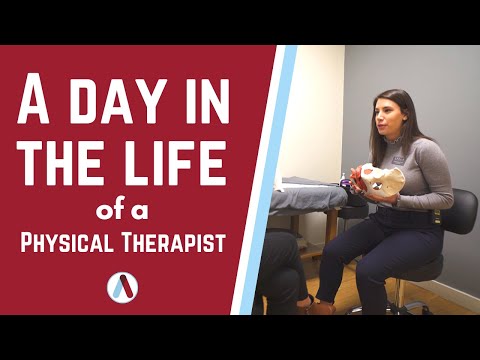
The morning's new evaluation is the specialty's signature hour: a runner with knee pain examined joint by joint — strength tested, mechanics watched on a treadmill, and the real culprit found two links up the chain in a weak hip. The diagnosis becomes a plan with a dosage, because exercise is this profession's prescription pad. The day's follow-ups span the field's range: a post-op ACL athlete progressed to plyometrics ahead of schedule and told why not to celebrate yet, a stroke survivor's gait relearned step by cued step, an 80-year-old whose balance work is the difference between independence and a nursing home, and a chronic pain patient treated as much with education and graded exposure as with hands. Between patients: notes, a call with a surgeon about a shared case, and a student intern's supervision. The 4pm slot is manual therapy — joint mobilization done with trained hands reading tissue. Movement is the medicine; the therapist is its physician.
Tasks at the job
- Plan, prepare, or carry out individually designed programs of physical treatment to maintain, improve, or restore physical functioning, alleviate pain, or prevent physical dysfunction in patients.
- Perform and document an initial exam, evaluating data to identify problems and determine a diagnosis prior to intervention.
- Confer with the patient, medical practitioners, or appropriate others to plan, implement, or assess the intervention program.
- Administer manual exercises, massage, or traction to help relieve pain, increase patient strength, or decrease or prevent deformity or crippling.
- Obtain patients' informed consent to proposed interventions.
- Test and measure patient's strength, motor development and function, sensory perception, functional capacity, or respiratory or circulatory efficiency and record data.
Workplace & working conditions
Work happens indoors in a climate-controlled setting, and most of the day is spent on your feet, and you work in close physical proximity to coworkers or the public for much of the shift.
The pace is often fast, with real time pressure to meet deadlines, and you're expected to exercise significant independent judgment day to day. The work is highly structured, following set procedures. You'll regularly deal with frustrated or upset people as part of the job, and almost all of the work is done as part of a team.
Education necessary or common
Doctor of Physical Therapy (DPT)
Common college majors
Licenses & certifications
- State physical therapy license (after the NPTE)
- Board specialties (OCS, SCS — career steps)
- CPR/BLS
Career path
Related fields
Courses to take
- Anatomy and Physiology — the profession's native language
- AP Biology — DPT prerequisite foundations
- AP Physics — biomechanics is applied physics
- AP Psychology — pain science and motivation are clinical tools
- AP Statistics — evidence-based practice literacy
Clubs, activities & competitions
- Athletic training student aide — the classic pre-PT experience
- HOSA-Future Health Professionals
- Sports teams — movement and training from inside
- Volunteer at a rehab clinic, hospital, or adaptive sports program
First steps you can take now
- Start logging observation hours at a PT clinic now — DPT programs require them and clinics welcome students
- Work or volunteer as a PT aide when age allows
- Learn functional anatomy seriously with a free app — a joint a week
- Map the road: exercise-science-style bachelor's, then a three-year Doctor of Physical Therapy