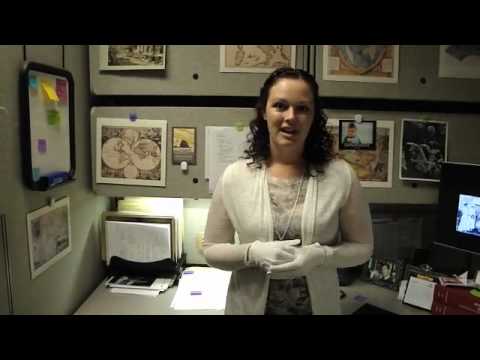
Photo: The National Archives (United Kingdom) (CC BY 3.0)
Job description
A big part of the work is building systems that make materials findable later: developing classification schemes, writing descriptions for individual records, and increasingly, migrating physical collections into searchable digital databases. Archivists also help researchers and the public actually use the collection, providing reference services and, in some roles, directing other staff who arrange, catalog, or mount exhibits from the materials. Deciding what's worth preserving and setting policies for who can access sensitive materials both require real independent judgment. Most positions require a master's degree in library science, archival science, or history.
Pros
- Faster than average projected growth (3.8%) for a niche specialty field
- High ceiling for a desk-based research role: top of range reaches $110k
- Day-to-day work grants significant independent judgment rather than close supervision
Cons
- Requires a master's degree in library or archival science, a real time and cost investment before entry
- A relatively small number of positions nationwide, so opportunities may be geographically limited
- Entry-level pay starts under $40k despite the graduate-degree requirement
A typical day
This morning's accession is twelve boxes from a shuttered local business: the archivist surveys the contents, drafts a processing plan, and begins arranging records by the archival principle of respecting original order — the folder sequence itself is historical evidence. Gloved hands flag brittle documents for conservation and photographs for cold storage. After lunch, reference duty: a genealogist needs 1920s payroll ledgers, a documentary producer wants rights guidance on photographs, and a professor's request surfaces a collection nobody has opened in a decade. Late afternoon goes to writing finding aids and updating digital records — increasingly the job includes migrating fragile born-digital files before formats die. Quiet work with a long memory.
Tasks at the job
- Organize archival records and develop classification systems to facilitate access to archival materials.
- Provide reference services and assistance for users needing archival materials.
- Prepare archival records, such as document descriptions, to allow easy access to information.
- Create and maintain accessible, retrievable computer archives and databases, incorporating current advances in electronic information storage technology.
- Establish and administer policy guidelines concerning public access and use of materials.
- Direct activities of workers who assist in arranging, cataloguing, exhibiting, and maintaining collections of valuable materials.
Workplace & working conditions
Work happens indoors in a climate-controlled setting, and most of the day is spent sitting at a desk.
You're expected to exercise significant independent judgment day to day.
Education necessary or common
Master's degree in library science, archival science, or history
Common college majors
Licenses & certifications
- Certified Archivist (Academy of Certified Archivists)
- Digital Archives Specialist (SAA, optional)
Career path
Related fields
Courses to take
- AP U.S. History — archives serve historical thinking
- AP English Language — finding aids and description are precision writing
- Computer Science Principles — digital preservation is now core to the field
- A world language — many collections aren't in English
- Library/media aide elective if offered
Clubs, activities & competitions
- Volunteer at a local historical society, library, or museum
- History club or National History Day competition — primary-source research is the archivist's raw material
- Yearbook — literally building your school's archive
- Digitization volunteering (many libraries crowdsource transcription online)
First steps you can take now
- Join a crowdsourced transcription project (the Library of Congress and Smithsonian run them online, open to anyone)
- Organize and label a real family collection — photos, letters — with an index
- Do National History Day and use an actual archive for sources
- Interview an archivist at your county historical society