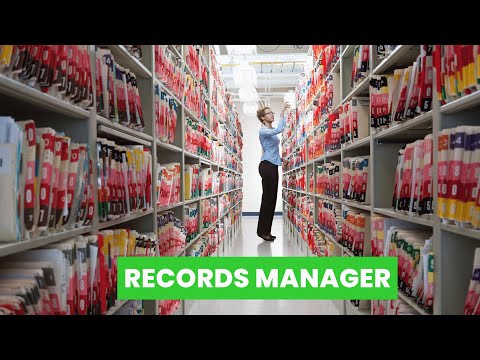
Photo: Obuezie (CC BY-SA 4.0)
Job description
A specialist's work ranges from big-picture policy, deciding who should be able to access which records and for how long, down to detailed taxonomy design, building the classification system that makes millions of files searchable instead of a digital junk drawer. Rolling out or upgrading the actual software is a team effort with IT, and once a system goes live, specialists often shift toward training staff on the new procedures and documenting best practices so the system stays usable as it grows. Because every organization is generating more digital content every year, the same core skills (taxonomy design, security classification, compliance know-how) transfer easily across industries like legal, healthcare, government, and corporate settings. It's typically an office-based, desk-bound role that runs at a fairly steady, moderate pace rather than being driven by hard daily deadlines.
Pros
- High pay ceiling near $188k paired with much faster than average growth (8.2%)
- Growing demand as organizations generate more digital content needing structured management
- Combines policy-design work with hands-on technical system implementation
Cons
- Requires building and enforcing detailed classification taxonomies, a painstaking, detail-heavy process
- Success depends on close, ongoing collaboration with IT specialists and compliance requirements
- Regular, moderate time pressure to keep systems and policies current as regulations change
A typical day
The legal hold request arrives first: litigation is coming, and every document related to a particular contract must be preserved — the specialist configures the hold, verifies it caught the right custodians, and documents the process, because "we deleted it accidentally" is not a defense courts accept. The morning's ongoing project is taxonomy design: interviewing the engineering department about how they actually search for documents, then revising the classification scheme so retrieval works the way people think. Afternoon brings the retention schedule review — thousands of records hitting their legally-mandated destruction dates, approved and processed with an audit trail. A department's new scanning workflow needs metadata standards set before bad habits calcify. It's invisible infrastructure: when it works, finding any document takes seconds and destroying one takes authorization.
Tasks at the job
- Assist in determining document management policies to facilitate efficient, legal, and secure access to electronic content.
- Assist in the development of document or content classification taxonomies to facilitate information capture, search, and retrieval.
- Implement electronic document processing, retrieval, and distribution systems in collaboration with other information technology specialists.
- Identify and classify documents or other electronic content according to characteristics such as security level, function, and metadata.
- Develop, document, or maintain standards, best practices, or system usage procedures.
- Assist in the assessment, acquisition, or deployment of new electronic document management systems.
Workplace & working conditions
Work happens indoors in a climate-controlled setting, and most of the day is spent sitting at a desk.
There's a regular, moderate amount of time pressure.
Education necessary or common
Bachelor's degree
Common college majors
Licenses & certifications
- CRM (Certified Records Manager)
- IGP (Information Governance Professional)
- CIP (Certified Information Professional)
Career path
Related fields
Courses to take
- Computer applications — document systems are the workplace
- English — classification writing demands precision
- AP Computer Science Principles — metadata and search conceptually
- Business electives — records serve business processes
- AP U.S. Government — retention law context
Clubs, activities & competitions
- Library volunteer or aide — cataloging is taxonomy in practice
- FBLA technology events
- Organize a real archive: a club's records, a family photo collection, with a system
- Yearbook — asset management under deadline
First steps you can take now
- Design a folder-and-naming system for your own files and hold yourself to it for a month
- Learn what metadata is and add proper tags to a photo collection
- Volunteer at a library and ask how cataloging decisions get made
- Take a free records management or information governance intro course