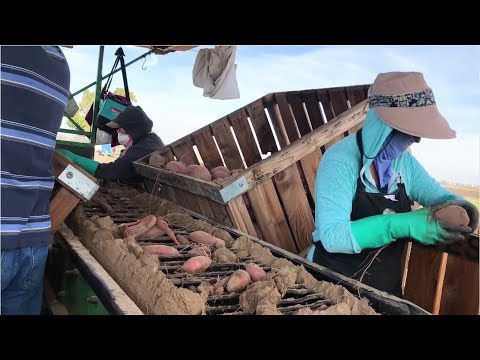
Photo: Reidgreg (CC BY-SA 4.0)
Job description
The work is fast-paced and repetitive: products move past on a line and each one gets checked against size, color, and quality standards within seconds, with defective or foreign material pulled and acceptable items boxed and labeled by grade. Because timing matters most at harvest, shifts often run longer during peak season and taper off the rest of the year. Many workers use this as an entry point into food processing or packing operations before moving into line supervision.
Pros
- Low barrier to entry, needing only a high school diploma plus on-the-job training
- Hands-on sensory work using sight, feel, and smell rather than a desk job
- Indoor, climate-controlled setting shields workers from the outdoor weather extremes common in other ag jobs
Cons
- Pay tops out under $45k with little room to grow beyond that ceiling
- Expect more than a standard 40-hour week, up to 50 hours during peak seasons
- Employment projected to shrink over the next decade (-5.4%) as sorting increasingly gets automated
A typical day
The apple line starts at 7, and the grader's station is a moving river of fruit: eyes and hands sorting by size, color, and defect — russeting to the juice bin, bruises out, premium pack-grade left rolling — decisions made in fractions of a second, thousands of times before the first break. Rotation moves the crew between stations to keep eyes fresh, because grading fatigue shows up as inconsistent packs a buyer will reject. Midday a USDA inspector pulls a sample box and the line's work holds up, which is the quiet pride of the job. The afternoon brings a variety changeover — new spec sheet, new color standards — and the close is a washdown and tallies; the farm's reputation ships in every box this crew graded.
Tasks at the job
- Grade and sort products according to factors such as color, species, length, width, appearance, feel, smell, and quality to ensure correct processing and usage.
- Discard inferior or defective products or foreign matter, and place acceptable products in containers for further processing.
- Place products in containers according to grade and mark grades on containers.
- Weigh products or estimate their weight, visually or by feel.
Workplace & working conditions
Work happens indoors in a climate-controlled setting, and most of the day is spent on your feet, and you work in close physical proximity to coworkers or the public for much of the shift. Standard safety equipment like gloves or safety glasses is commonly worn.
The pace is often fast, with real time pressure to meet deadlines.
Education necessary or common
High school diploma; some on-the-job training or apprenticeship
Licenses & certifications
- Food handler card
- GAP/food safety training (employer-provided)
- USDA grading license for advanced inspection roles
Related fields
Courses to take
- Agriculture/Horticulture — knowing produce raises your grade accuracy
- Biology — defects, diseases, and ripening
- Business Math — counts, percentages, and pack-out rates
- Health — food safety standards
- Physical Education — standing focus for full shifts
Clubs, activities & competitions
- FFA — horticulture and produce judging events literally train this skill
- 4-H produce and crop projects
- A farm stand or grocery produce job
- Any quality-focused repetitive craft
First steps you can take now
- Get seasonal packing-house or farm stand work (many hire at 14-16 for harvest)
- Learn USDA grade standards for one crop — they are free online and surprisingly interesting
- Practice defect-spotting in the grocery produce aisle
- Get a food handler card