Photo: Jabbi (CC BY-SA 3.0)
Job description
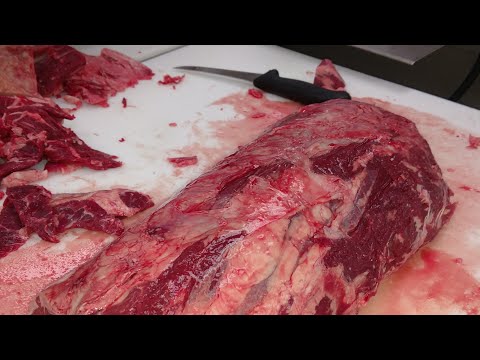
The job is fast-paced and repetitive by design: cutters inspect each piece for defects or excess fat, trim it to spec using knives, cleavers, or bandsaws, then weigh and tag it before it moves on to packing. Most work happens in meat processing plants, grocery store meat departments, or butcher shops, often standing at a station for the length of the shift. With experience, cutters can move into specialty butchery, custom cutting for retail customers, or supervisory roles overseeing a processing line.
Pros
- Faster than average projected job growth at 5.5%, with strong demand (18,400 jobs)
- Accessible entry with just a high school diploma and on-the-job training
- Hands-on, skilled knife work with fast, tangible results each shift
Cons
- Entry-level pay is quite low, and the pay ceiling stays under $50k
- Above-average hours, often exceeding a standard 40-hour work week
- Fast-paced work with knives and saws requiring constant precision and focus
A typical day
The floor runs cold by design — thirty-eight degrees — and the shift starts with knife checks and PPE: mesh glove, apron, boots, and a steel kept within reach because a sharp knife is a safe knife. On the trim line, the work is precise repetition with real skill inside it: each piece worked to spec, fat trimmed to the customer's quarter-inch standard, defects flagged, and the yield protected — sloppy trimming is money on the floor, and the good cutters' hands waste nothing. Rotation moves the crew between stations through the morning, protecting joints and staying sharp. The afternoon shifts to a specialty order: portioning fillets to exact weights for a restaurant chain, scale checks constant. Sanitation is the day's bookend and its constant: USDA inspection is on-site daily in this industry, and the crew's habits are built for it. Knife skills compound into craft over years — the best cutters move like the work is easy, which is the oldest sign it isn't.
Tasks at the job
- Use knives, cleavers, meat saws, bandsaws, or other equipment to perform meat cutting and trimming.
- Inspect meat products for defects, bruises or blemishes and remove them along with any excess fat.
- Weigh meats and tag containers for weight and contents.
- Cut and trim meat to prepare for packing.
- Separate meats and byproducts into specified containers and seal containers.
Workplace & working conditions
Work happens indoors in a climate-controlled setting, and most of the day is spent on your feet, and you work in close physical proximity to coworkers or the public for much of the shift. The role involves regular exposure to hazardous equipment or conditions, and standard protective equipment (gloves, safety glasses, and similar) is expected.
The pace is often fast, with real time pressure to meet deadlines, and decisions come up constantly and often need to be made quickly. Precision and accuracy are essential to the work. You'll regularly deal with frustrated or upset people as part of the job.
Education necessary or common
High school diploma; some on-the-job training or apprenticeship
Licenses & certifications
- Food handler card / ServSafe — the baseline
- HACCP training — the industry's food safety framework
- Meat cutter apprenticeships (union and grocery chains still run them) — the path to journeyman butcher pay
Career path
Related fields
Courses to take
- Culinary Arts — knife skills and meat fabrication taught directly
- Biology — anatomy is the job's map
- Health — food safety and sanitation science
- Physical Education — cold, standing, repetitive work rewards conditioning
- Business Math — yields and portioning are constant arithmetic
Clubs, activities & competitions
- Culinary club or ProStart program — restaurant meat fabrication basics
- FFA — livestock and meat science career development events include real meat judging
- Part-time grocery or butcher shop work
- 4-H livestock projects — the animal-to-table understanding
First steps you can take now
- Learn real knife skills and knife sharpening — a culinary class or a patient butcher teaches both
- Ask a local butcher shop or grocery meat department about entry jobs — many hire at 18 and train
- Watch a professional break down a whole chicken, then practice until it takes five minutes
- Get a food handler card — cheap, fast, and required