Photo: Shixart1985 (CC BY 2.0)
Job description
A lot of the work is behavioral: using techniques like positive reinforcement to teach socially acceptable behavior, and building routines around independence and self-advocacy appropriate for a preschooler's age. Teachers develop individualized education plans covering a child's educational, physical, and social goals, and continuously observe and document performance, behavior, and health to track progress over time. Because young children with disabilities often need close supervision around equipment and materials, safety instruction gets folded into everyday classroom routines rather than taught as a separate lesson.
Pros
- Pay can reach $130k at the top of the range, strong for an early-childhood teaching role
- Deeply meaningful work directly shaping young children's educational, social, and physical development
- Collaborative role, working as part of a team rather than alone in a classroom
Cons
- Slower than average projected job growth limits the pace of new openings
- Only about 2,100 positions nationwide, so opportunities may be geographically limited
- Requires a bachelor's degree plus state certification, and often a master's for advancement
A typical day
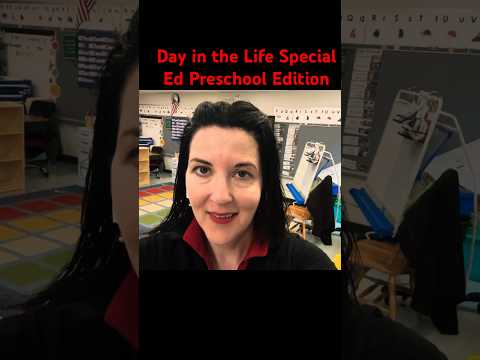
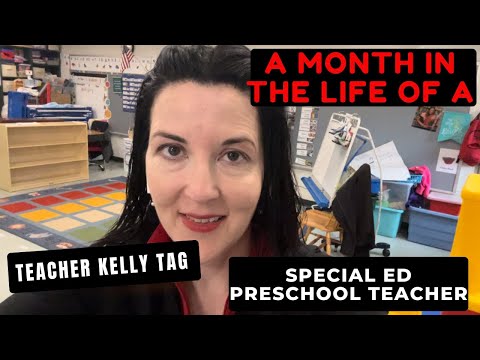
The morning starts on the carpet with four three-year-olds, a bin of bubbles, and a plan: every giggle is a chance to prompt a word, a sign, or eye contact, and each attempt gets logged. Sessions run in 20-minute cycles -- fine-motor work with playdough, a feeding goal at snack time, a meltdown turned into a co-regulation lesson. A speech therapist and an occupational therapist rotate through, and the teacher weaves their targets into play so it never feels like therapy. After the children leave at noon, the afternoon belongs to home visits, IEP paperwork, and coaching parents on strategies that work at the kitchen table.
Tasks at the job
- Teach socially acceptable behavior, employing techniques such as behavior modification or positive reinforcement.
- Develop individual educational plans (IEPs) designed to promote students' educational, physical, or social development.
- Teach students personal development skills, such as goal setting, independence, or self-advocacy.
- Develop or implement strategies to meet the needs of students with a variety of disabilities.
- Observe and evaluate students' performance, behavior, social development, and physical health.
- Instruct and monitor students in the use and care of equipment or materials to prevent injuries and damage.
Workplace & working conditions
Work happens indoors in a climate-controlled setting, and you work in close physical proximity to coworkers or the public for much of the shift. Noise levels can be distracting or uncomfortable.
You're expected to exercise significant independent judgment day to day. Almost all of the work is done as part of a team.
Education necessary or common
Bachelor's degree in early childhood special education plus state teaching certification; a master's is common and sometimes required for licensure advancement
Common college majors
Licenses & certifications
- State teaching license in early childhood special education
- CPR/First Aid (Pediatric)
Career path
Related fields
Courses to take
- Child development or early childhood electives -- the most direct preparation available
- AP Psychology -- developmental milestones are the job's measuring stick
- American Sign Language -- many preschoolers with delays communicate by sign first
- English or AP Language -- family communication and legal documentation
- Health -- feeding, motor, and medical needs show up daily
Clubs, activities & competitions
- Volunteer in a preschool or early-intervention program
- FCCLA -- early childhood competitive events
- Regular babysitting for toddlers and preschoolers
- Special Olympics Young Athletes volunteering
First steps you can take now
- Volunteer with toddler or preschool programs at a library, YMCA, or church
- Learn basic ASL signs young children use
- Shadow an early-childhood special education classroom or early-intervention visit
- Read a parent's-eye account of early intervention to understand the family side