Photo: John Robert McPherson (CC0)
Job description
A typical caseload might include teaching a client precise cane techniques such as diagonal touches and two-point taps, then working up to travel with a guide dog or an electronic travel aid depending on their needs and setting. Therapists build individualized rehabilitation plans based on assessments, and they also train clients to lean on touch, hearing, smell, and body awareness in place of vision, since so much of independent living relies on senses that get little use otherwise. Because clients keep progressing over months, therapists document assessments and outcomes carefully so a plan can keep adapting alongside a client's skills.
Pros
- Strong pay even at the entry level, with much faster than average growth (13.8%)
- Large and growing field with 10,200 positions nationwide, strong job availability
- Directly improves clients' independence and daily functioning, offering tangible, visible impact
Cons
- Requires a master's degree plus certification, a specialized credentialing path
- Work often happens on the move (in vehicles, clients' homes, or community settings) rather than a fixed office
- Emotionally demanding work supporting clients adjusting to significant vision loss
A typical day
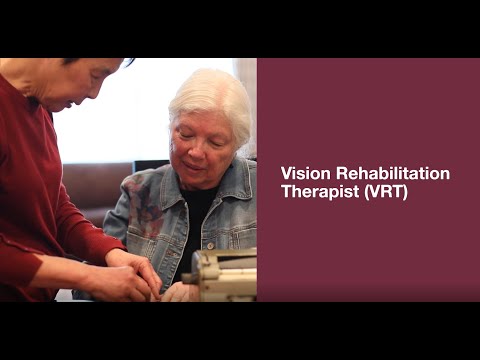
The first session is a street corner, and it matters more than any classroom: an O&M specialist works with a client learning to cross an intersection using traffic sounds — the surge of parallel traffic is the cue — coaching cane technique and judgment through a skill that means the difference between independence and isolation. The specialist shadows close, silent, letting earned competence build confidence. Mid-morning is a home visit as a vision rehabilitation therapist role: a retiree losing sight to macular degeneration relearns her own kitchen — high-contrast cutting boards, tactile marks on the stove dial, an organized system her hands can trust. The afternoon holds a low vision clinic session matching a client to magnification devices for reading, then documentation and a school consult for a teenager's travel routes on a new campus. Progress here is measured in real things: a bus ride taken alone, a meal cooked safely, a signature signed. Few careers deliver independence this directly.
Tasks at the job
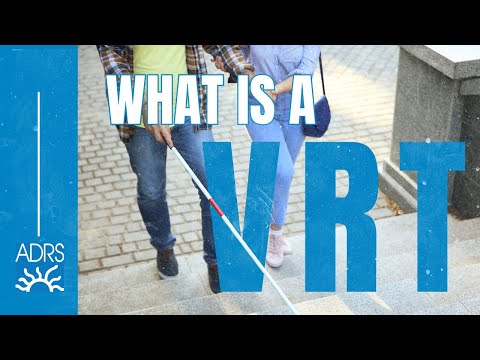
- Teach cane skills, including cane use with a guide, diagonal techniques, and two-point touches.
- Recommend appropriate mobility devices or systems, such as human guides, dog guides, long canes, electronic travel aids (ETAs), and other adaptive mobility devices (AMDs).
- Train clients with visual impairments to use mobility devices or systems, such as human guides, dog guides, electronic travel aids (ETAs), and other adaptive mobility devices (AMDs).
- Develop rehabilitation or instructional plans collaboratively with clients, based on results of assessments, needs, and goals.
- Write reports or complete forms to document assessments, training, progress, or follow-up outcomes.
- Train clients to use tactile, auditory, kinesthetic, olfactory, and proprioceptive information.
Workplace & working conditions
Work happens mostly inside a vehicle or piece of equipment, and you work in close physical proximity to coworkers or the public for much of the shift.
You're expected to exercise significant independent judgment day to day. The work is highly structured, following set procedures.
Education necessary or common
Master's degree in vision rehabilitation therapy, orientation and mobility, or a related field, plus certification
Common college majors
Licenses & certifications
- COMS (Certified Orientation and Mobility Specialist) — the ACVREP credential
- CVRT (Certified Vision Rehabilitation Therapist)
- CLVT (Certified Low Vision Therapist)
- State teaching certification for school-based roles
Career path
Related fields
Courses to take
- Anatomy and Physiology — the visual system and its failures
- AP Psychology — adjustment to vision loss is emotional as much as practical
- AP Biology — the clinical foundation
- Health Science electives — patient care orientation
- Public Speaking — teaching is the therapy
- Orientation to teaching/education electives
Clubs, activities & competitions
- HOSA — health professions exposure
- Volunteer with services for the blind — many communities have lighthouse organizations or guide dog programs needing help
- Peer tutoring — teaching skills to individuals
- Braille or accessibility clubs where they exist
- Buddy programs with students with disabilities
First steps you can take now
- Volunteer with a local organization serving people with visual impairments
- Try a sighted-guide training session (organizations teach the technique in an hour) and learn the etiquette
- Do a blindfolded task session (led properly by a volunteer organization) to grasp what skill replaces sight
- Research the specialized master's programs (O&M and vision rehab) — a small, high-placement field few students know exists