Photo: AMISOM Public Information (CC0)
Job description
Many barbers run their own chair or shop, which layers bookkeeping, ordering supplies, and hiring or supervising other stylists on top of the hands-on cutting, trimming, and shaving work. Building a loyal, returning client base is central to the trade, since income depends heavily on repeat business rather than a fixed salary, which is part of why pay varies so widely across the field. The path in usually runs through vocational training or an apprenticeship rather than a four-year degree.
Pros
- Pay tops out above $76k, strong upside reachable via vocational training
- Faster than average projected job growth (4.1% over the next decade)
- Independent, skilled craft work with the option to run a small business
Cons
- Above-average hours, typically more than a standard 40-hour work week
- Entry-level pay can be quite low before building a steady client base
- Precision-driven, standing work in close physical proximity to clients all day
A typical day
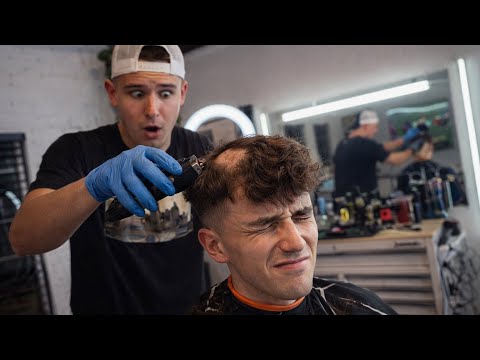
The first chair client at 9 is a regular — a fade the barber could cut from memory but doesn't, because consistency is the brand. The day moves in 30-45 minute rhythms: clipper work faded through the guards, scissor-over-comb on top, a straight-razor edge-up finished with hot lather, and the conversation that makes a shop a shop — sports, work, life advice flowing both directions. Walk-ins fill gaps between appointments booked on the phone app; a father brings a kid for a first haircut, which takes patience and earns a family of clients. Between cuts: tools disinfected to state board standards, the station swept, social posts of today's best work. By close the barber has been on their feet nine hours and knows half the neighborhood's news.
Tasks at the job
- Clean and sterilize scissors, combs, clippers, and other instruments.
- Shape and trim beards and moustaches, using scissors.
- Perform clerical and administrative duties such as keeping records, paying bills, and hiring and supervising personnel.
- Stay informed of the latest styles and hair care techniques.
- Drape and pin protective cloths around customers' shoulders.
- Cut and trim hair according to clients' instructions or current hairstyles, using clippers, combs, hand-held blow driers, and scissors.
Workplace & working conditions
Work happens indoors in a climate-controlled setting, and most of the day is spent on your feet, and you work in close physical proximity to coworkers or the public for much of the shift.
You're expected to exercise significant independent judgment day to day. Precision and accuracy are essential to the work, and the work is highly structured, following set procedures.
Education necessary or common
Vocational training, apprenticeship, or associate's degree
Licenses & certifications
- State barber license (the required credential)
- Master barber license (state-dependent progression)
Career path
Related fields
Courses to take
- Cosmetology/Barbering program if your career center offers one — some students graduate license-ready
- Art — line, symmetry, and head-shape awareness
- Business math / Personal Finance — most barbers rent a chair and run themselves as a business
- Health — sanitation science is licensed and tested
- Public Speaking
Clubs, activities & competitions
- SkillsUSA cosmetology/barbering competitions
- Cut hair for friends and family (clipper practice within your state's rules)
- Art club — drawing sharpens the eye
- Part-time shop sweep/front-desk work at a barbershop
First steps you can take now
- Ask a local shop if you can work the front desk or sweep — proximity is the classic apprenticeship start
- Look up your state's barber licensing hours and whether your high school career center covers them
- Practice clipper control on a mannequin head (they're cheap) with tutorials
- Follow five elite barbers online and study their consultation habits, not just their fades