Photo: MTA Capital Construction Mega Projects (CC BY 2.0)
Job description
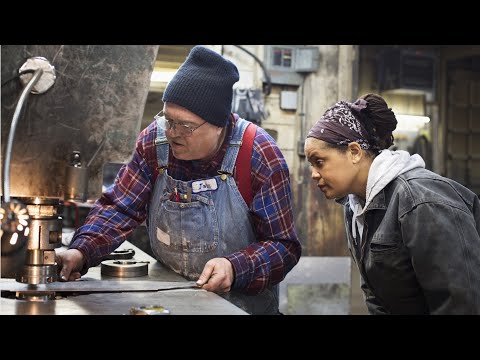
The work ranges from setting up and running machines that cut, bend, and straighten sheet metal, to shaping pieces by hand over anvils or forms, to soldering and welding parts together and smoothing rough seams. Duct installers within the trade specifically fit prefabricated ductwork for heating and air conditioning systems. It's physical, hands-on work done mostly on your feet indoors, with real exposure to noise and hazardous equipment, so gloves, safety glasses, and other protective gear are standard.
Pros
- Accessible with just a high school diploma and on-the-job apprenticeship
- Strong upper pay range, reaching over $105k with experience
- Steady projected job growth of 2.4% over the next decade
Cons
- Regular exposure to hazardous equipment, noise, and contaminants on the job
- Standard workday involves being on your feet with limited climate control
- Precision demands are constant, leaving little room for error under time pressure
A typical day
The shop morning starts at the layout table: today's job is a run of transition fittings for a hospital's air handling system, and the worker develops the patterns — flat layouts of three-dimensional shapes, geometry made practical — before the plasma table cuts blanks and the brake bends them true. Seams get locked, joints sealed, and each fitting labeled for the field crew. After lunch the work moves to the jobsite: hanging duct from threaded rod in a mechanical room's organized chaos, coordinating inches with the pipefitters and electricians who want the same ceiling. A field measure for a custom hood closes the day. The trade lives where craft meets construction — and the union apprenticeship pays you to learn it.
Tasks at the job
- Maintain equipment, making repairs or modifications when necessary.
- Fabricate or alter parts at construction sites, using shears, hammers, punches, or drills.
- Determine project requirements, such as scope, assembly sequences, or required methods or materials, using blueprints, drawings, or written or verbal instructions.
- Select gauges or types of sheet metal or nonmetallic material, according to product specifications.
- Shape metal material over anvils, blocks, or other forms, using hand tools.
- Trim, file, grind, deburr, buff, or smooth surfaces, seams, or joints of assembled parts, using hand tools or portable power tools.
Workplace & working conditions
Work happens indoors, though not always in a climate-controlled space, and most of the day is spent on your feet. Noise levels can be distracting or uncomfortable. The role involves regular exposure to hazardous equipment or conditions and contaminants, and standard protective equipment (gloves, safety glasses, and similar) is expected.
There's a regular, moderate amount of time pressure. Precision and accuracy are essential to the work.
Education necessary or common
High school diploma; some on-the-job training or apprenticeship
Licenses & certifications
- SMART apprenticeship completion (journeyman card)
- AWS welding certifications
- OSHA 10 Construction
- ICB/TABB certifications (HVAC testing, later)
Career path
Related fields
Courses to take
- Geometry — pattern development is the trade's signature skill
- Shop/Metals — cutting, bending, and fabrication basics
- Algebra — layout math and material calculations
- Drafting/CAD — reading and making shop drawings
- Physics — airflow basics for HVAC work
Clubs, activities & competitions
- SkillsUSA — sheet metal and welding competitions
- Robotics team — fabrication crossover
- Metal shop or maker club projects
- Habitat for Humanity builds
First steps you can take now
- Take metal shop and learn the brake, shear, and snips
- Make one sheet metal project from a flat pattern you drew yourself
- Apply to the SMART union apprenticeship at 18 — earn while learning
- Get OSHA 10 Construction online