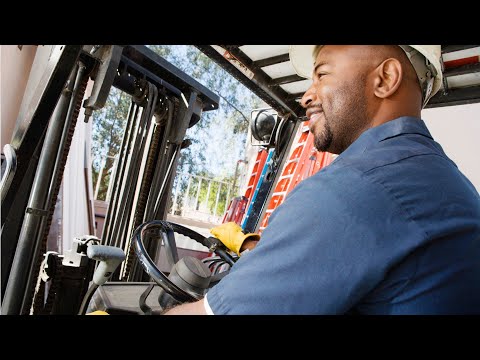
Photo: ENERGY.GOV (Public domain)
Job description
A shift means running the machine to grade stakes and hand signals from a spotter to keep the dig within spec, but the job goes beyond straight excavation: operators may also be asked to backfill excavations, break rock or concrete, build inclines and ramps, or even maintain winter roads at the site. Before any of that, operators inspect and set up their equipment and get familiar with a site's specific digging plan and safety procedures, since surface mining locations vary widely in terrain and hazard level. The work is done as part of a team, mostly outdoors and exposed to the weather, with regular exposure to hazardous equipment and noise that calls for standard protective gear. A high school diploma plus on-the-job training or apprenticeship is the typical path in, with pay ranging from about $42,000 to $82,000.
Pros
- Entry accessible with just a high school diploma and on-the-job training, no degree needed
- Top pay clears $82k, well above what many entry-level trades offer
- Hands-on machine operating work with real independent judgment day to day
Cons
- Hiring is projected to shrink slightly over the next decade (-0.4%)
- Regular exposure to hazardous equipment, noise, and outdoor weather conditions
- Above-average hours, often exceeding a standard 40-hour work week
A typical day
The shift starts in the pit with a walkaround — checking tracks, teeth, and hydraulic lines on a machine taller than a house — and a review of the day's digging plan with the pit supervisor. Then hours in the cab: swinging the shovel between the face and a queue of haul trucks, loading each in three or four passes, eyes constantly on the highwall for loose rock. Radio chatter coordinates every move, and a mid-shift stoppage for a blast means repositioning to a second face. The operator logs production counts and any equipment complaints at shift change, because the machine runs around the clock even when the people rotate.
Tasks at the job
- Move levers, depress foot pedals, and turn dials to operate power machinery, such as power shovels, stripping shovels, scraper loaders, or backhoes.
- Set up or inspect equipment prior to operation.
- Become familiar with digging plans, machine capabilities and limitations, and efficient and safe digging procedures in a given application.
- Observe hand signals, grade stakes, or other markings when operating machines so that work can be performed to specifications.
- Operate machinery to perform activities such as backfilling excavations, vibrating or breaking rock or concrete, or making winter roads.
- Create or maintain inclines or ramps.
Workplace & working conditions
Work happens primarily outdoors, exposed to whatever the weather is doing, and most of the day is spent sitting at a desk. Noise levels can be distracting or uncomfortable. The role involves regular exposure to hazardous equipment or conditions and contaminants, and standard protective equipment (gloves, safety glasses, and similar) is expected.
There's a regular, moderate amount of time pressure, and you're expected to exercise significant independent judgment day to day. Almost all of the work is done as part of a team.
Education necessary or common
High school diploma; some on-the-job training or apprenticeship
Licenses & certifications
- MSHA Part 46/48 new miner training (required at mines)
- Heavy equipment operator program certificates
- CDL is often valuable alongside
Career path
Related fields
Courses to take
- Auto or Diesel shop — understanding the machine keeps you running and safe
- Geometry — bench heights, angles, and load placement are spatial work
- Physics — leverage, load, and momentum at enormous scale
- Earth Science — knowing rock behavior matters in a pit
- Health/PE — alertness and fitness are safety equipment here
Clubs, activities & competitions
- SkillsUSA — heavy equipment and diesel programs
- FFA — ag mechanics builds equipment sense
- A job or family work involving tractors, skid steers, or mowers
- Volunteer or work on any construction-adjacent crew
First steps you can take now
- Get seat time on any equipment legally available to you (tractor, skid steer, mower)
- Look up heavy equipment operator programs at community and technical colleges
- Watch MSHA new-miner training materials to understand mine safety culture
- Talk to someone at a local quarry or mine about entry-level laborer openings