Photo: Kambai Akau (CC BY-SA 4.0)
Job description
The work involves packing sand into mold sections and core boxes with hand or pneumatic ramming tools, positioning patterns and cores so a mold reassembles correctly, and using cranes (or directing coworkers) to move heavy mold sections into place. Coremakers often specialize by casting type, automotive, industrial, or architectural, and clean and repair surface imperfections in molds along the way. With experience, some move into mold inspection or a lead role overseeing a foundry's pouring schedule, though the trade overall has been contracting sharply.
Pros
- Hands-on foundry craft producing the molds and cores behind metal castings used across manufacturing
- Entry with just a high school diploma and on-the-job training, no college needed
- Physical, varied work using cranes, hand tools, and pneumatic ramming equipment
Cons
- Employment is projected to shrink sharply over the next decade (-25.9%), one of the steeper declines in production
- Above-average hours in a fast-paced environment with real deadline pressure
- Regular exposure to hazardous equipment, contaminants, and an uncontrolled indoor climate
A typical day
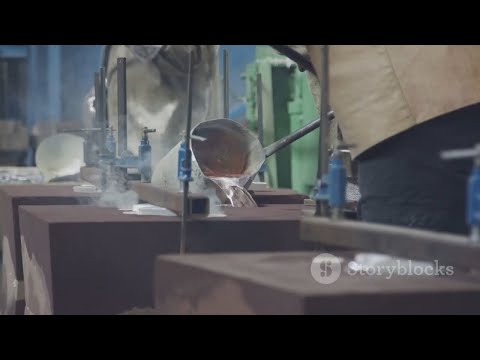
The pattern for today's job — a pump housing — hangs above the bench as the coremaker starts blowing sand cores, each one baked, inspected for cracks, and set on the rack like fragile pottery that will soon hold molten iron. Mid-morning is mold assembly: cope and drag rammed with sand around the pattern, cores seated in their prints with clearances checked by feel and gauge. The pour happens after lunch — the crew in silver aluminized gear, iron at over two thousand degrees streaming into the sprues the coremaker built for exactly this moment. The shakeout later reveals the verdict: a clean casting means the invisible work inside the mold was perfect.
Tasks at the job
- Clean and smooth molds, cores, and core boxes, and repair surface imperfections.
- Sift and pack sand into mold sections, core boxes, and pattern contours, using hand or pneumatic ramming tools.
- Position patterns inside mold sections, and clamp sections together.
- Position cores into lower sections of molds, and reassemble molds for pouring.
- Form and assemble slab cores around patterns, and position wire in mold sections to reinforce molds, using hand tools and glue.
- Move and position workpieces, such as mold sections, patterns, and bottom boards, using cranes, or signal others to move workpieces.
Workplace & working conditions
Work happens indoors, though not always in a climate-controlled space, and most of the day is spent on your feet. Noise levels can be distracting or uncomfortable. The role involves regular exposure to hazardous equipment or conditions and contaminants, and standard protective equipment (gloves, safety glasses, and similar) is expected.
The pace is often fast, with real time pressure to meet deadlines.
Education necessary or common
High school diploma; some on-the-job training or apprenticeship
Licenses & certifications
- OSHA 10
- AFS (American Foundry Society) training modules
- Forklift/crane certifications (employer-provided)
Career path
Related fields
Courses to take
- Metals Shop — casting and metalwork basics where offered
- Chemistry — sand binders, metallurgy, and combustion
- Geometry — patterns, cores, and draft angles are 3D thinking
- Physics — heat, flow, and shrinkage
- Art (sculpture) — moldmaking is a sculptor's craft
Clubs, activities & competitions
- SkillsUSA — some chapters compete in foundry/casting events
- Metal casting as a hobby (aluminum melts at hobby-safe scales with supervision)
- Robotics or maker club — 3D printing is modern patternmaking
- Sculpture or ceramics club — mold thinking transfers
First steps you can take now
- Watch the Foundry Educational Foundation's intro materials on how casting works
- Do a supervised small aluminum casting project (maker spaces and some shop classes offer them)
- Visit a foundry during Manufacturing Day in October
- Learn to read a simple casting drawing