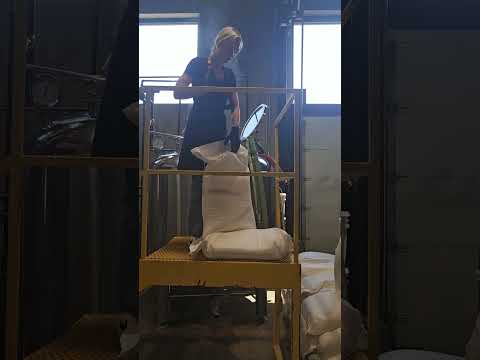
Photo: Thechadwix (CC BY-SA 4.0)
Job description
It starts well before the still even runs: choosing and mixing the grains, fruit, or sugar source that will become the mash, then managing fermentation to get it ready for distillation. At the still itself, a distiller has to judge exactly when to make each cut, separating the usable spirit from the parts that need to be discarded, since getting that timing wrong can ruin an entire batch. After distillation, the job shifts toward patience: selecting barrels, monitoring how the spirit matures over months or years, and blending different batches to hit a consistent house style. Because it involves high-proof alcohol, open flame or heat sources, and flammable vapors, safety procedure is taken seriously, and it's a field most people still enter through hands-on experience rather than a specific degree.
Pros
- No formal degree required, most distillers build skill through hands-on distillery experience
- Pay can reach $110k at the top of the range for a specialized craft role
- Combines chemistry, sensory judgment, and craft in deciding the cuts and blends that define a product
Cons
- Above-average hours, expect more than a standard 40-hour work week
- Constant exposure to high-proof alcohol, open flames, and flammable vapors requires strict safety discipline
- A single mistimed cut or fermentation error can ruin an entire batch
A typical day
Mash day starts with the mill: grain ground and mixed into hot water on a schedule where temperature is everything, enzymes converting starch to sugar before the yeast ever arrives. While the mash cools, the fermenters get checked — day-three wash bubbling on schedule, gravity readings logged. The still run is the day's centerpiece and its art: heads, hearts, and tails separated by taste and instinct as much as by proof, the distiller nosing glasses at the parrot and making the cut that defines the house style — keep too much and the spirit is harsh, cut too tight and the yield starves. Afternoon means barrel work in the rickhouse: samples thieved from casks at two and four years, blending trials on the bench. Cleaning fills every gap; a distillery is mostly a sanitation operation with a romantic reputation.
Tasks at the job
- Select and mix grains or other raw materials for the mash bill.
- Manage fermentation of the mash before distillation.
- Operate and monitor stills to separate and collect spirit at the correct proof.
- Taste and evaluate spirit at each cut to decide what to keep or discard.
- Oversee barrel aging, including selecting barrels and monitoring maturation.
- Blend aged spirits to achieve a consistent final product.
Workplace & working conditions
Work happens indoors in a distillery, around large equipment, open flames or heat sources, and flammable vapors.
The work requires close attention to safety procedures given the presence of high-proof alcohol and heat, and precision matters since a mistimed cut can ruin a batch. Aging timelines mean some decisions made today aren't judged for years.
Education necessary or common
No formal degree required, though some pursue fermentation science or chemistry coursework; most learn through hands-on distillery experience
Licenses & certifications
- TTB federal compliance knowledge (employer context; 21+ for production work)
- State alcohol production permits
- Fermentation/distillation short courses (e.g. Siebel, university extensions)
Career path
Related fields
Courses to take
- Chemistry — distillation is chemistry made physical
- AP Biology — fermentation is applied microbiology
- Physics — heat transfer and vapor behavior run the still
- Math — proof, dilution, and yield calculations
- Business — craft distilleries live or die on the business side
Clubs, activities & competitions
- 4-H or FFA food science projects
- Chemistry club — distillation appears in real labs
- Science fair fermentation project (non-alcoholic: bread yeast, kombucha)
- Farmers market or food production part-time work
First steps you can take now
- Ferment something legal now — bread, kombucha, vinegar — and take notes like a pro
- Read a book on distillation science to learn the vocabulary
- Tour a craft distillery with a parent and ask the distiller their path
- Study the chemistry: what actually separates at each temperature