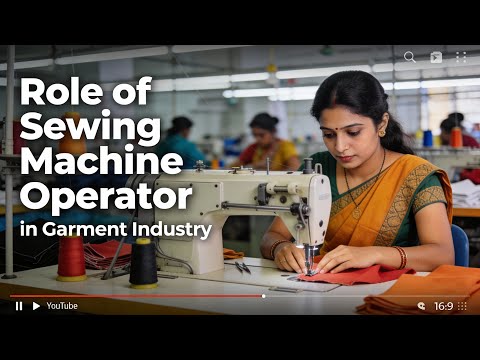
Photo: USAID (Public domain)
Job description
A shift usually opens with threading the machine, loading bobbins, and matching cloth pieces so dye lots and patterns line up correctly before sewing to spec. Operators check finished work against a ruler for stitching accuracy and adjust machine settings as garment styles change, while also handling routine upkeep themselves, like replacing needles and clearing lint or oil buildup between runs. Many operators specialize in a particular product line or stitch type, and with experience can move into quality inspection or a line-lead role overseeing several machines.
Pros
- Sizable job pool (13,000 positions) despite industry contraction, so openings still exist
- Low educational barrier, HS diploma with on-the-job training is enough to start
- Seated, climate-controlled indoor work with only moderate day-to-day time pressure
Cons
- Employment projected to shrink 10.8% over the next decade as apparel manufacturing declines
- Both entry-level pay and the overall ceiling (under $48k) are low
- Repetitive, quality-control-heavy tasks with limited room for creative input
A typical day
The line starts at 7am, and the operator's station is set for the day's run: side seams on performance jackets, the industrial machine threaded, tensions tested on scrap, and the bundle system feeding work in dozens. The rhythm is the skill — position, sew, trim, stack — with each seam checked against the spec's stitch count and the operator's hands developing the speed that piece rates reward. Mid-shift the fabric changes to a slippery liner and tensions need adjusting; knowing the machine beats calling the mechanic. A quality auditor pulls pieces at 1pm; clean work means no rework pile. The afternoon closes with production counts and needle checks. Skilled operators on technical fabrics — outdoor gear, medical textiles, aerospace — earn well above the trade's reputation.
Tasks at the job
- Examine and measure finished articles to verify conformance to standards, using rulers.
- Monitor machine operation to detect problems such as defective stitching, breaks in thread, or machine malfunctions.
- Place spools of thread, cord, or other materials on spindles, insert bobbins, and thread ends through machine guides and components.
- Match cloth pieces in correct sequences prior to sewing them, and verify that dye lots and patterns match.
- Turn knobs, screws, and dials to adjust settings of machines, according to garment styles and equipment performance.
- Perform equipment maintenance tasks such as replacing needles, sanding rough areas of needles, or cleaning and oiling sewing machines.
Workplace & working conditions
Work happens indoors in a climate-controlled setting, and most of the day is spent sitting at a desk.
There's a regular, moderate amount of time pressure.
Education necessary or common
High school diploma; some on-the-job training or apprenticeship
Related fields
Courses to take
- Family & Consumer Sciences/Sewing — machine skills start here
- Consumer Math — piece rates and production counts
- Shop — machine maintenance mindset
- Art — precision and pride in finished goods
Clubs, activities & competitions
- FCCLA — fashion and construction events
- Costume crew — machine sewing under deadline
- 4-H sewing
- A production or assembly part-time job
First steps you can take now
- Learn to sew on any machine this month — free patterns and videos abound
- Sew one complete garment from a pattern
- Look up cut-and-sew manufacturers near you — US technical sewing is hiring
- Practice sewing straight, consistent seams at speed on scrap fabric