Photo: U.S. Army photo by 1st Lt. Katherine Sibilla (Public domain)
Job description
Care spans the full arc of pregnancy: monitoring fetal development by checking heartbeat, position, and estimated size, guiding patients through prenatal visits, and then supporting labor, delivery, and postpartum recovery. Midwives also provide broader family planning services, like inserting IUDs or fitting cervical caps, and prescribe medications where state law allows, building an individualized care plan for each patient rather than a one-size-fits-all protocol. The role calls for real independent judgment since mistakes can have serious consequences, and it's usually practiced as part of a larger care team. It requires a graduate nursing degree (an MSN or DNP) plus nurse-midwifery certification, with pay from about $93,000 to $188,000 and demand growing quickly.
Pros
- High upside earning potential, with top pay reaching $188k, and strong pay even at entry level
- Much faster than average projected job growth at 11.1% over the next decade
- Deeply meaningful, hands-on work guiding patients through pregnancy and birth
Cons
- Requires a graduate nursing degree (MSN or DNP) plus specialized midwifery certification
- Above-average hours, often exceeding a standard 40-hour work week, including unpredictable delivery timing
- Only about 500 positions nationwide, a fairly small and specialized field
A typical day
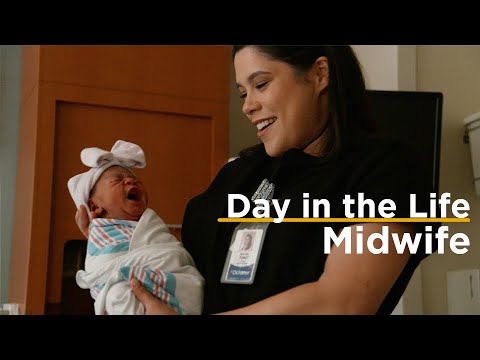
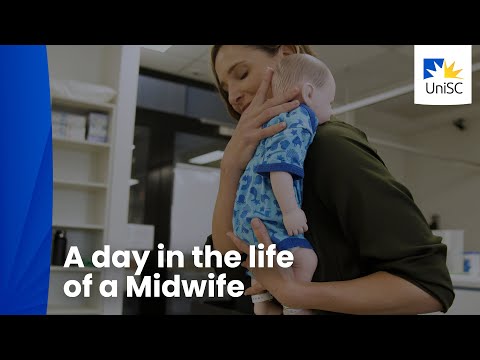
Clinic starts at 8:30 with prenatal visits stacked through the morning — fundal heights measured, heartbeats found, and birth plans discussed with the unhurried attention that defines midwifery care. Two well-woman visits mix in: an annual exam and a contraception consult, the gynecologic half of the role many people don't know CNMs carry. The hospital pages at 1pm — a patient at 6 centimeters — and the afternoon becomes labor support: position changes, monitoring, a calm presence through transition, and a delivery at 4:40 where the midwife's hands are the first to touch a new person. Postpartum checks, newborn assessment alongside the pediatric team, and charting follow. On call means the phone stays close tonight; babies schedule themselves.
Tasks at the job
- Provide prenatal, intrapartum, postpartum, or newborn care to patients.
- Monitor fetal development by listening to fetal heartbeat, taking external uterine measurements, identifying fetal position, or estimating fetal size and weight.
- Document patients' health histories, symptoms, physical conditions, or other diagnostic information.
- Provide patients with direct family planning services, such as inserting intrauterine devices, dispensing oral contraceptives, and fitting cervical barriers, including cervical caps or diaphragms.
- Prescribe medications as permitted by state regulations.
- Develop and implement individualized plans for health care management.
Workplace & working conditions
Work happens indoors in a climate-controlled setting, and you work in close physical proximity to coworkers or the public for much of the shift. Noise levels can be distracting or uncomfortable. The role involves regular exposure to contaminants, and standard protective equipment (gloves, safety glasses, and similar) is expected.
There's a regular, moderate amount of time pressure, and you're expected to exercise significant independent judgment day to day. Mistakes can have serious consequences, so accuracy matters a lot. You'll regularly deal with frustrated or upset people as part of the job, and almost all of the work is done as part of a team.
Education necessary or common
Master of Science in Nursing (MSN) or Doctor of Nursing Practice (DNP), plus nurse-midwifery certification
Common college majors
Licenses & certifications
- Registered Nurse (RN) license
- Certified Nurse-Midwife (CNM, AMCB)
- Neonatal Resuscitation Program (NRP)
Career path
Related fields
Courses to take
- AP Biology — reproductive physiology is the professional core
- Anatomy and Physiology — the pregnant body in working detail
- AP Chemistry — nursing school and pharmacology prerequisites
- AP Psychology — birth is a psychological event managed alongside a physical one
- AP Statistics — evidence-based practice and research reading
Clubs, activities & competitions
- HOSA-Future Health Professionals — clinical competitions and exposure
- Hospital volunteering, requesting mother-baby or family birth units
- Red Cross — CPR certification and health service hours
- Peer health education programs
First steps you can take now
- Learn the credential landscape: the CNM path runs through a BSN and RN experience into a graduate midwifery program
- Take an infant CPR course this month
- Ask a labor and delivery nurse or CNM for an informational interview
- Volunteer with any organization supporting new families — postpartum meal trains, diaper banks, WIC events