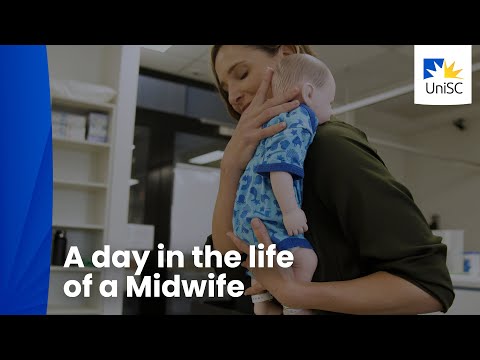
Photo: Unknown photographer (Public domain)
Job description
Care typically starts well before delivery, with ongoing prenatal visits that track a patient's physical and emotional health and catch complications like gestational diabetes or pre-term labor early. During labor, midwives carry responsibility for the immediate wellbeing of both patient and newborn, including emergency interventions like resuscitation if something goes wrong, which means having a contingency plan ready for every birth even though most proceed without complications. Certified Nurse-Midwives typically work within a hospital team alongside physicians, while Certified Professional Midwives more often attend births in home or birth-center settings under a separate, non-nursing credentialing path.
Pros
- Faster than average projected job growth (3.6% over the next decade)
- Deeply meaningful, hands-on work building ongoing relationships with patients through pregnancy and birth
- Two distinct credentialing paths (nurse-midwifery or direct-entry) offer flexibility in how to enter the field
Cons
- Relatively small number of positions nationwide limits where these jobs are available
- Mistakes can have serious consequences for both patient and newborn, raising the stakes constantly
- Above-average hours and on-call availability, since births don't follow a set schedule
A typical day
The hospital shift starts at 7am with sign-out from the overnight midwife: two patients in early labor, one induction scheduled for nine. The morning alternates between labor rooms — adjusting positions, reading fetal monitor strips, quietly narrating progress to a nervous first-time family. A precipitous delivery just before noon means the midwife catches a baby twenty minutes after the patient arrives. The afternoon holds postpartum rounds and a clinic block of prenatal visits, and every encounter gets charted before handoff. It's a career of long stretches of patience punctuated by minutes that demand everything.
Tasks at the job
- Identify tubal and ectopic pregnancies and refer patients for treatments.
- Provide necessary medical care for infants at birth, including emergency care such as resuscitation.
- Conduct ongoing prenatal health assessments, tracking changes in physical and emotional health.
- Establish and follow emergency or contingency plans for mothers and newborns.
- Identify, monitor, or treat pregnancy-related problems such as hypertension, gestational diabetes, pre-term labor, or retarded fetal growth.
- Obtain complete health and medical histories from patients including medical, surgical, reproductive, or mental health histories.
Workplace & working conditions
Work happens indoors in a climate-controlled setting, and you work in close physical proximity to coworkers or the public for much of the shift. Standard safety equipment like gloves or safety glasses is commonly worn.
You're expected to exercise significant independent judgment day to day. Mistakes can have serious consequences, so accuracy matters a lot. Almost all of the work is done as part of a team.
Education necessary or common
Master of Science in Nursing (MSN) or Doctor of Nursing Practice (DNP) for a Certified Nurse-Midwife; a separate non-nursing certification path also exists for a Certified Professional Midwife
Common college majors
Licenses & certifications
- Registered Nurse (RN) license
- Certified Nurse-Midwife (CNM, AMCB)
- Neonatal Resuscitation Program (NRP)
Career path
Related fields
Courses to take
- Anatomy and Physiology — labor and delivery is applied physiology, hour by hour
- AP Biology — the science backbone for nursing school
- AP Chemistry — required for BSN programs and pharmacology beyond
- AP Psychology — birth is as psychological as it is physical
- AP Statistics — evidence-based practice starts with reading studies well
Clubs, activities & competitions
- HOSA-Future Health Professionals — nursing-track competitive events
- Hospital volunteering, requesting the family birth center if offered
- Certified babysitting plus infant/child CPR through the Red Cross
- Science Olympiad — Anatomy and Physiology event
First steps you can take now
- Map the nurse-midwife path: BSN, RN experience in labor and delivery, then a graduate midwifery program
- Interview a labor and delivery nurse and a CNM about how their roles differ
- Take an infant CPR class this month
- Volunteer with any program serving new parents — a diaper bank, WIC event, or family shelter