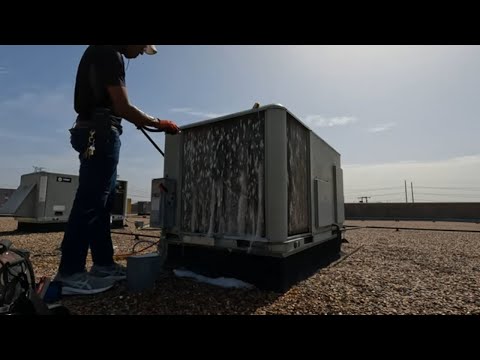
Photo: Shixart1985 (CC BY 2.0)
Job description
A typical day involves examining machinery and parts to check for defects, cleaning and lubricating equipment, and moving tools and supplies between work stations. Helpers also keep inventory stocked by ordering new parts and sometimes take on more hands-on tasks like welding, fabricating parts from blueprints, or installing replacement equipment themselves. The work happens indoors, often around hazardous equipment, which is why specialized protective gear is standard.
Pros
- Over 11,800 jobs nationwide, one of the more available entry points into skilled trades
- Modest but steady projected growth (2.3%) over the next decade
- Learn hands-on skills like welding, fabrication, and equipment repair on the job
Cons
- Entry-level pay can be quite low, starting around $29k
- Regular exposure to hazardous equipment, heights, and noise on the job
- Largely support work (fetching tools, cleaning up) rather than independent, skilled repair
A typical day
The morning starts in the shop, pulling parts for the day's work orders — belts, filters, bearings — and loading the service truck while the technician reviews the schedule. At the first stop, a packaging plant with a down conveyor, the helper fetches tools, cleans components in the parts washer, and holds the light steady while the mechanic traces the failure. By afternoon the helper is trusted with real tasks: draining fluids, swapping filters, running the grease gun down a lubrication checklist, and testing a repaired motor under supervision. Back at the shop, the day closes with inventory — logging which parts were used so the truck is ready again by morning.
Tasks at the job
- Examine and test machinery, equipment, components, and parts for defects to ensure proper functioning.
- Clean or lubricate vehicles, machinery, equipment, instruments, tools, work areas, and other objects, using hand tools, power tools, and cleaning equipment.
- Transfer tools, parts, equipment, and supplies to and from work stations and other areas.
- Order new parts to maintain inventory.
- Design, weld, and fabricate parts, using blueprints or other mechanical plans.
- Install or replace machinery, equipment, and new or replacement parts and instruments, using hand or power tools.
Workplace & working conditions
Work happens indoors, though not always in a climate-controlled space, and most of the day is spent on your feet. Noise levels can be distracting or uncomfortable. The role involves regular exposure to hazardous equipment or conditions and contaminants and working at heights, and specialized protective equipment is standard.
There's a regular, moderate amount of time pressure.
Education necessary or common
High school diploma; some on-the-job training or apprenticeship
Licenses & certifications
- OSHA 10-Hour General Industry
- Forklift operator certification
- ASE entry-level certification (for the vehicle-repair direction)
Related fields
Courses to take
- Auto Shop or Small Engine Repair — mechanical diagnosis starts here
- Shop/Industrial Technology — tools, fasteners, and safety habits
- Physics — machines are levers, motors, and friction
- Algebra — measurements, clearances, and parts math
- Computer Applications — work orders and manuals are digital now
Clubs, activities & competitions
- SkillsUSA — automotive and industrial maintenance competitions
- FIRST Robotics — building and fixing machines under deadline
- Fix things at home deliberately: bikes, mowers, appliances
- Part-time work at a hardware store — parts knowledge compounds
First steps you can take now
- Tear down and rebuild a small engine (mower, chainsaw) with a guide
- Ask a local plant or dealership about helper/lube-tech openings for students
- Start a toolbox with quality basics and learn each tool's proper use
- Shadow a maintenance technician for a day through a family or school connection