Photo: istolethetv (CC BY 2.0)
Job description
Slicing and prepping garnishes, arranging bottles and glassware into an appealing display, and keeping the bar area clean round out the job beyond pouring drinks and handling payment. The role also carries real judgment calls: recognizing when a patron has had too much and arranging a taxi or other safe transportation rather than serving them another round. Pay varies enormously by venue, since tips at a busy late-night bar can dwarf the base wage earned at a quiet restaurant bar, and most bartenders learn the trade through on-the-job training rather than a degree.
Pros
- Faster than average projected job growth (5.9% over the next decade)
- Large nationwide job base (129,600 positions)
- Standard, predictable full-time-range hours (30-40/week) plus strong tip upside (tops near $74k)
Cons
- Entry-level pay can be quite low before tips
- Regularly responsible for de-escalating intoxicated or frustrated patrons
- Most of the shift spent on your feet in close, constant contact with the public
A typical day
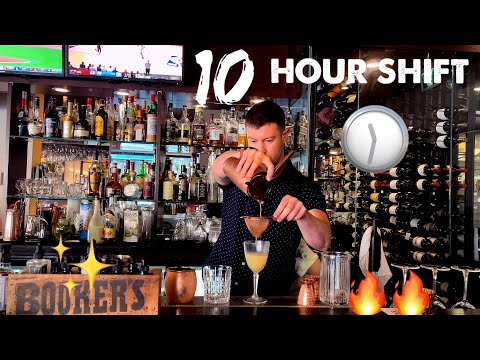
Setup starts at 4pm for a 5 o'clock open: fruit cut, juices squeezed, wells stocked, kegs checked, the night's specials memorized. Early evening is conversational pace — regulars, first dates, a business meeting nursing two beers — while the bartender builds drinks with an economy of motion that took years. By 9 the rail is three-deep and the job becomes air-traffic control: taking two orders while making three, ringing tickets, watching the room's temperature for the table getting too loud and the guest who's had enough, because cutting someone off gracefully is the profession's hardest skill. Last call, then the unglamorous hour: bar broken down, till counted, floors done. Home by 2am with cash tips and sore feet.
Tasks at the job
- Collect money for drinks served.
- Clean bars, work areas, and tables.
- Attempt to limit problems and liability related to customers' excessive drinking by taking steps such as persuading customers to stop drinking, or ordering taxis or other transportation for intoxicated patrons.
- Slice and pit fruit for garnishing drinks.
- Arrange bottles and glasses to make attractive displays.
- Clean glasses, utensils, and bar equipment.
Workplace & working conditions
Work happens indoors in a climate-controlled setting, and most of the day is spent on your feet, and you work in close physical proximity to coworkers or the public for much of the shift.
You're expected to exercise significant independent judgment day to day. You'll regularly deal with frustrated or upset people as part of the job.
Education necessary or common
High school diploma; some on-the-job training or apprenticeship
Licenses & certifications
- State responsible-alcohol-service certificate (TIPS/ServSafe Alcohol, state-dependent)
- Food handler's card
Career path
Related fields
Courses to take
- Culinary courses
- Business math — tills, pours, and costs
- AP Psychology — the bar is a nightly seminar in human behavior
- Public Speaking
- Health
Clubs, activities & competitions
- Part-time restaurant work — busser, host, server is the standard ladder
- FCCLA or DECA hospitality events
- School event concessions
- Debate or improv — quick verbal footwork
First steps you can take now
- Start in a restaurant now in any front-of-house role; bartending is promoted into, not hired into
- Learn the ten classic cocktails on paper and the reasoning behind their ratios
- Get a food handler's card and note your state's alcohol-service age rules (many states allow serving at 18)
- Practice a bar's real skill: hold three orders in your head while doing something else with your hands