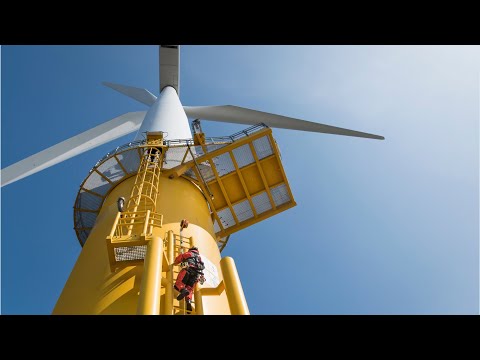
Photo: U.S. Army Corps of Engineers Sacramento District (Public domain)
Job description
Engineers in this role start with a site audit, checking a building's structure, electrical setup, and layout, before designing photovoltaic or solar thermal systems suited to that specific location. They draw up electrical diagrams and panel schematics in CAD software, then run computer simulations to predict how much energy a system will actually generate. Once installation begins, they stay involved, guiding crews through startup, testing, and commissioning. Most of the work happens at a desk, though site visits mean occasionally working at heights.
Pros
- High upside earning potential, up to $190k, with just a bachelor's degree
- Solid demand with 9,300 jobs nationwide
- Blends office-based design work with hands-on site visits and installs
Cons
- Slower than average projected growth (2.1%)
- Above-average hours, often exceeding a standard 40-hour work week
- Site audits involve regular exposure to working at heights
A typical day
The morning starts with a shading analysis for a warehouse roof -- running the sun-path model, checking how a neighboring building's shadow moves across the array in December. By late morning it's a design review call with the install team, who found the roof structure can't take the planned racking load, so the layout gets reworked on the spot. The afternoon goes to sizing inverters and wire runs for two residential jobs and running a performance simulation to verify the production estimate promised to the customer. Last task of the day: stamping drawings for the permit package due Friday.
Tasks at the job
- Conduct engineering site audits to collect structural, electrical, and related site information for use in the design of residential or commercial solar power systems.
- Create plans for solar energy system development, monitoring, and evaluation activities.
- Design or coordinate design of photovoltaic (PV) or solar thermal systems, including system components, for residential and commercial buildings.
- Provide technical direction or support to installation teams during installation, start-up, testing, system commissioning, or performance monitoring.
- Create electrical single-line diagrams, panel schedules, or connection diagrams for solar electric systems, using computer-aided design (CAD) software.
- Perform computer simulation of solar photovoltaic (PV) generation system performance or energy production to optimize efficiency.
Workplace & working conditions
Work happens indoors in a climate-controlled setting. The role involves regular exposure to working at heights.
There's a regular, moderate amount of time pressure.
Education necessary or common
Bachelor's degree
Common college majors
Licenses & certifications
- FE then PE license (Professional Engineer)
- NABCEP PV Design Specialist
Career path
Related fields
Courses to take
- AP Physics 1/C -- circuits, energy, and forces are the job's foundation
- AP Calculus AB/BC -- engineering degrees require it from day one
- AP Environmental Science -- context for the entire renewable-energy industry
- AP Computer Science Principles -- design and simulation tools are software
- Geometry and Trigonometry -- sun angles and roof pitches are daily calculations
Clubs, activities & competitions
- FIRST Robotics -- hands-on electrical and mechanical design
- Science Olympiad -- engineering-adjacent events under competition pressure
- Solar car or solar boat challenge teams where available
- Environmental club -- lead an energy-audit project of your school
First steps you can take now
- Build a small solar phone-charger kit and measure its real output through a day
- Use the free PVWatts calculator to model a solar array on your own roof
- Take a free online intro to electrical engineering course
- Ask a local solar installer if you can watch a site assessment