Photo: Secretlondon (CC BY-SA 4.0)
Job description
Workers sort items by color, fabric, and required cleaning technique before loading them into washers or dry-cleaning machines and adjusting valves and levers to control the amount of soap, bleach, and other additives used. Once a cycle finishes, they remove, sort, count, and fold or hang the finished items, running extractors and driers along the way to speed things up. The work happens indoors, standing for most of the shift, with a regular, moderate amount of time pressure to keep items moving through the cycle, and some workers specialize further as spotters or dyers for harder-to-clean fabrics.
Pros
- Faster than average projected job growth (5.4%) with a large national pool of positions (31,900)
- Low barrier to entry, just a HS diploma and on-the-job training
- Predictable indoor, climate-controlled setting with only moderate time pressure
Cons
- Entry-level pay can be quite low, and the ceiling around $43,190 caps upside
- Physically active, on-your-feet work with repetitive tasks
- Little room for specialization or advancement within the role itself
A typical day
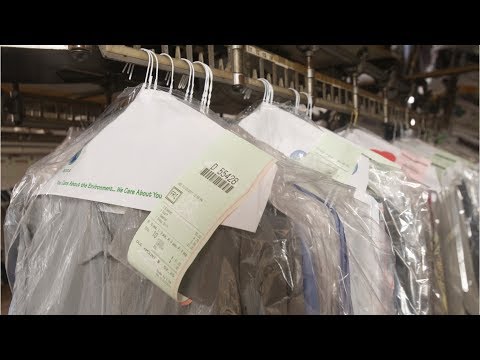
The counter opens at 7 for the drop-off rush — suits tagged, stains pointed out and noted, promises made for Thursday. Behind the counter the real work runs all day: sorting by fabric and color, loading the dry-cleaning machine with its solvent cycles, and working the spotting board — the trade's true skill — where a wine stain on silk gets treated with the right chemical, steam, and patience instead of hope. Mid-morning the pressing stations hum: shirts through the buck press at a rhythm of dozens per hour, wool trousers hand-finished with creases like blades. The afternoon adds a wedding dress cleaning (handled like a museum piece) and a commercial linen order for a restaurant. Orders get bagged, racked by ticket number, and the conveyor spins a customer's Thursday promise to the front, kept.
Tasks at the job
- Start washers, dry cleaners, driers, or extractors, and turn valves or levers to regulate machine processes and the volume of soap, detergent, water, bleach, starch, and other additives.
- Sort and count articles removed from dryers, and fold, wrap, or hang them.
- Load articles into washers or dry-cleaning machines, or direct other workers to perform loading.
- Remove items from washers or dry-cleaning machines, or direct other workers to do so.
- Operate extractors and driers, or direct their operation.
- Examine and sort into lots articles to be cleaned, according to color, fabric, dirt content, and cleaning technique required.
Workplace & working conditions
Work happens indoors in a climate-controlled setting, and most of the day is spent on your feet. Standard safety equipment like gloves or safety glasses is commonly worn.
There's a regular, moderate amount of time pressure.
Education necessary or common
High school diploma; some on-the-job training or apprenticeship
Licenses & certifications
- DLI (Drycleaning & Laundry Institute) certifications — the industry's training path
- OSHA hazard communication training for solvents
- Certified Garment Care Professional (later, for owners)
Related fields
Courses to take
- Chemistry — solvents, stain treatment, and fabric reactions are daily chemistry
- Family and Consumer Sciences — textiles and fabric care
- Business Math — tickets, pricing, and shop economics
- Business or Entrepreneurship — many cleaners are family businesses with ownership paths
- Art — finishing quality is a visual standard
Clubs, activities & competitions
- FCCLA — fashion and textile events
- Part-time work at a cleaner, tailor, or laundromat
- Sewing or fashion club — fabric knowledge transfers directly
- Costume crew for theater — garment care under deadline
First steps you can take now
- Learn fabric types and read care labels critically for a week — the codes are a real language
- Master ironing a dress shirt properly; it's the trade's entry skill
- Ask a local dry cleaner about counter or assembly jobs — many hire students
- Research stain chemistry basics — why some stains need solvents and others need enzymes