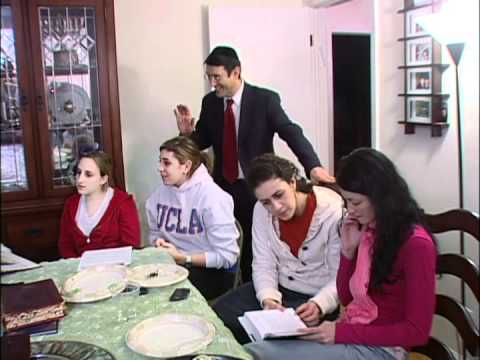
Photo: OU Productions (CC BY-SA 3.0)
Job description
Much of the role centers on the synagogue itself: leading services, chanting or reading from the Torah, and teaching Jewish law, ethics, and text to students of all ages, including Bar and Bat Mitzvah preparation. Rabbis are also called on for deeply personal moments outside the building, officiating weddings and funerals, visiting the sick in hospitals, and counseling congregants through illness or loss. The schedule follows the Jewish calendar closely, with especially intense demands around the Sabbath and High Holy Days and quieter stretches in between. It's a role that combines ongoing scholarly study with real responsibility for interpreting Jewish law and representing the community publicly.
Pros
- High upside earning potential, up to $150k
- Deeply meaningful work guiding a community through both celebration and crisis
- Combines scholarly study, teaching, and pastoral counseling in one role
Cons
- Long, demanding hours are common, especially around the Sabbath and High Holy Days
- Requires 5+ years of rabbinical study following a bachelor's degree before ordination
- On-call responsibility for congregants' emergencies, illness, and loss extends beyond a set schedule
A typical day
The rabbi's Thursday starts with morning minyan at 7am, then coffee with a congregant navigating a divorce — pastoral counseling is the invisible half of the calling. Mid-morning goes to the Shabbat sermon, wrestling a Torah portion into a message that speaks to this week's world, followed by a b'nai mitzvah lesson with a nervous seventh grader learning to chant trope. The afternoon holds a hospital visit, a conversion candidate's study session, and a synagogue board call about the budget. Evening brings a shiva minyan at a grieving family's home, where presence matters more than words. The rhythm is ancient text and immediate human need, braided daily.
Tasks at the job
- Lead worship services and chant or read from the Torah according to the congregation's traditions.
- Teach classes on Jewish law, ethics, and text to children and adults, including Bar/Bat Mitzvah preparation.
- Officiate at life-cycle events such as brit milah, weddings, and funerals.
- Provide pastoral counseling to congregants dealing with illness, loss, or personal crisis.
- Answer questions of Jewish law (halacha) and custom for individuals and families.
- Represent the congregation in interfaith and broader community organizations.
Workplace & working conditions
Work is centered in a synagogue, with travel to congregants' homes, hospitals, and funeral homes for life-cycle events and visits.
The schedule follows the Jewish calendar closely, with intense demands around the Sabbath and High Holy Days and quieter stretches between them. Congregants rely on the rabbi's independent judgment on matters of Jewish law, and the role requires ongoing scholarly study.
Education necessary or common
Ordination (semikhah) through a rabbinical seminary, typically requiring 5+ years of study following a bachelor's degree
Common college majors
Career path
Related fields
Courses to take
- Hebrew — the language of the texts and liturgy; take it anywhere it's offered
- AP English Literature — close reading is the rabbinic skill applied to Torah
- History/AP World History — Jewish history spans all of it
- Philosophy or Theory of Knowledge (IB) — theology engages hard questions
- Public Speaking — teaching and preaching weekly
Clubs, activities & competitions
- Jewish youth groups: BBYO, NFTY, USY, NCSY — leadership roles especially
- Hebrew school teaching assistant or tutor
- Volunteer service and tikkun olam projects
- Debate or Model UN — argument and text skills
First steps you can take now
- Talk with your own rabbi about their path — rabbis love this conversation
- Take on a leadership role in a Jewish youth movement this year
- Deepen your Hebrew: apps, classes, or a tutor
- Attend a Shabbaton or summer program run by a movement you might study in (Reform, Conservative, Orthodox, and others differ meaningfully)