Photo: Photo by 4th IBCT PAO (Public domain)
Job description
A physician assistant conducts complete physical exams, compiles a patient's medical history, and counsels them on everything from prescribed therapy to family planning and general health maintenance. Day-to-day work includes ordering diagnostic tests like x-rays, bloodwork, and EKGs and interpreting the results for anything outside normal ranges. Graduating from an accredited PA program is required, and with physician approval, PAs in most states can prescribe medication directly.
Pros
- Much faster than average projected job growth (20.4%), among the fastest-growing healthcare roles
- Strong pay without needing a full medical degree, just a master's-level program
- High upside earning potential up to $190k
Cons
- Above-average hours, expect more than a standard 40-hour work week
- Always practices under physician supervision, less full autonomy than an MD
- Fast-paced, high-stakes environment where mistakes have real consequences
A typical day
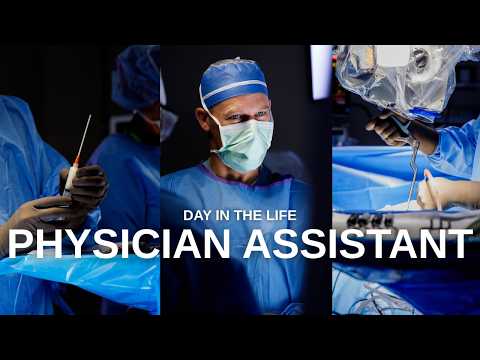
Clinic starts at 8am with a full panel: the PA sees a sinus infection, a diabetic follow-up with insulin adjusted, a laceration sutured in the procedure room, and a chest-pain triage that earns an immediate ECG and a physician consult — the collaborative line used exactly as designed. The morning's rhythm is diagnosis at volume: histories taken with practiced efficiency, exams focused, orders placed, and prescriptions written under the PA's own authority in most states. Lunch is a drug-rep-free education hour on new anticoagulation guidelines. The afternoon shows the profession's signature flexibility — this PA worked emergency medicine two years ago and dermatology before that, switching specialties without new degrees, a mobility physicians don't have. Today's afternoon adds a joint injection, a wellness visit with real lifestyle counseling, and results calls. The supervising physician and PA compare notes on two complex patients at day's end — colleagues in fact if not in title. Medicine's best-kept efficiency: 27 patients today, cared for well.
Tasks at the job
- Interpret diagnostic test results for deviations from normal.
- Prescribe therapy or medication with physician approval.
- Obtain, compile, and record patient medical data, including health history, progress notes, and results of physical examination.
- Examine patients to obtain information about their physical condition.
- Administer or order diagnostic tests, such as x-ray, electrocardiogram, and laboratory tests.
- Instruct and counsel patients about prescribed therapeutic regimens, normal growth and development, family planning, emotional problems of daily living, and health maintenance.
Workplace & working conditions
Work happens indoors in a climate-controlled setting, and you work in close physical proximity to coworkers or the public for much of the shift. Standard safety equipment like gloves or safety glasses is commonly worn.
The pace is often fast, with real time pressure to meet deadlines, and you're expected to exercise significant independent judgment day to day. Mistakes can have serious consequences, so accuracy matters a lot, and the work is highly structured, following set procedures. You'll regularly deal with frustrated or upset people as part of the job, and almost all of the work is done as part of a team.
Education necessary or common
Master's degree from an accredited physician assistant program, plus national certification
Common college majors
Licenses & certifications
- PA-C (NCCPA certification)
- State PA license
Career path
Related fields
Courses to take
- AP Biology — the pre-PA science spine
- AP Chemistry — prerequisite chain for PA school
- Anatomy and Physiology — clinical medicine's map
- AP Psychology — patient communication and behavioral health
- AP Statistics — evidence literacy
Clubs, activities & competitions
- HOSA-Future Health Professionals
- EMT or CNA training when eligible — PA schools require patient-care hours, and early starters win
- Hospital or clinic volunteering
- Science Olympiad — Anatomy and Physiology
First steps you can take now
- Learn PA school's hidden requirement now: hundreds-to-thousands of hands-on patient-care hours — plan a CNA, EMT, or medical assistant credential into high school or college
- Shadow a PA and ask why they chose it over medical school; the answer is illuminating either way
- Get CPR certified this month
- Compare the PA, NP, and MD paths honestly — length, cost, autonomy, and flexibility differ sharply