Photo: Ash link (CC BY 3.0)
Job description
The work ranges from performing before live audiences at concerts and recitals to recording in a studio or performing for broadcast, either as a soloist or as part of a group like an orchestra, ensemble, or band. Musicians typically specialize in a particular instrument family or style of music, and staying sharp means regularly listening to recordings to master new pieces or maintain existing skills. Many musicians also teach lessons on their instrument, which adds a steadier income stream alongside the more irregular performance and recording work.
Pros
- Large, active market with 19,400 people already employed in the field nationwide
- Deeply skilled, expressive craft built on precision and years of practice mastering an instrument or voice
- Standard, predictable full-time hours are common relative to many performing arts jobs
Cons
- Slower than average projected job growth in an already crowded, competitive field
- Requires sustained precision and accuracy, since performance quality depends on constant practice and rehearsal
- Many musicians supplement performing income by teaching, since steady solo work can be inconsistent
A typical day
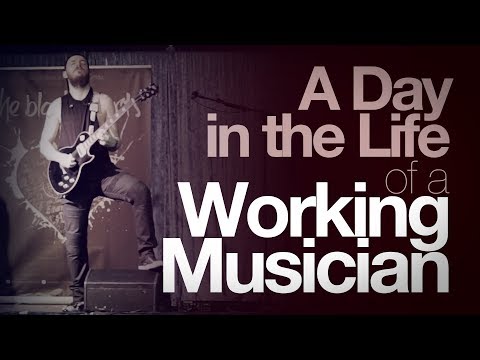
No two working musicians share a schedule, but a full one looks like this: morning practice — ninety focused minutes on technique and repertoire before the phone wins — then an errand run that doubles as listening time for tonight's set list. Early afternoon is business: invoicing last weekend's wedding gig, confirming Thursday's studio session, posting a clip because the algorithm feeds the calendar. A 3pm rehearsal with the band works new material until it breathes. Load-in for the evening's show is at 6, sound check at 7, and the performance itself — the two hours everything else exists to support — starts at 9. Home past midnight, ears ringing, calendar checked for tomorrow: a teaching afternoon and a church service Sunday. The career is a portfolio, and the portfolio is stitched together nightly.
Tasks at the job
- Perform before live audiences in concerts, recitals, educational presentations, and other social gatherings.
- Specialize in playing a specific family of instruments or a particular type of music.
- Play musical instruments as soloists, or as members or guest artists of musical groups such as orchestras, ensembles, or bands.
- Play from memory or by following scores.
- Listen to recordings to master pieces or to maintain and improve skills.
- Teach music for specific instruments.
Workplace & working conditions
Work happens indoors in a climate-controlled setting, and most of the day is spent sitting at a desk, and you work in close physical proximity to coworkers or the public for much of the shift.
There's a regular, moderate amount of time pressure. Precision and accuracy are essential to the work. Almost all of the work is done as part of a team.
Education necessary or common
Bachelor's degree
Common college majors
Related fields
Courses to take
- Band, Orchestra, or Choir every year — ensemble skills and sight-reading are employable skills
- AP Music Theory — the language of every rehearsal and session
- Music Technology — self-recording is now part of the job
- Business or Personal Finance — musicians are small businesses with instruments
- AP English Language and Composition — bios, grants, and pitches
Clubs, activities & competitions
- All-State, honor bands, and solo/ensemble festivals — audition experience compounds
- Form a band or ensemble and gig anywhere that will have you
- Pit orchestra, jazz band, church gigs, community theater
- Tri-M Music Honor Society
First steps you can take now
- Book one real performance this month — open mic, church, farmers market — and treat it professionally
- Record yourself weekly and listen back honestly; the tape doesn't flatter
- Take lessons with the best teacher you can find, even if less often
- Talk to a working musician about how their income actually assembles — gigs, teaching, sessions, streaming