Photo: Engelbert Reineke (German Federal Archive) (CC BY-SA 3.0 de)
Job description
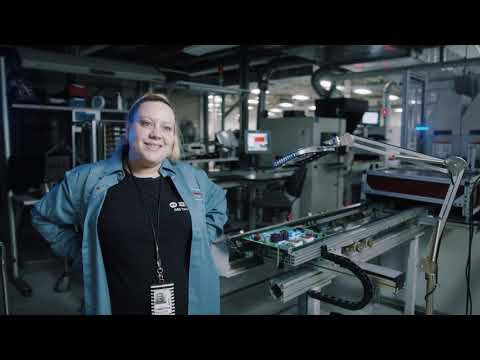
Instead of being locked into a single station, team assemblers cycle through the whole build process and run quality checks against blueprints and work orders as they go. More experienced members may also help decide work assignments, train new hires, or supervise the rest of the team. The floor moves fast with real deadlines, so the job calls for independent judgment and steady precision, all while working around machinery, noise, and materials that make gloves and safety glasses standard gear.
Pros
- Only a high school diploma plus on-the-job training or apprenticeship required to enter
- Rotating through multiple tasks builds broad hands-on production skills rather than one repetitive motion
- Standard 40 to 45 hour week, close to a typical full-time schedule
Cons
- Regular exposure to workplace contaminants requires standard protective equipment throughout the shift
- Noise levels on the production floor can be distracting or uncomfortable
- Fast pace with real time pressure to meet deadlines while maintaining precision and accuracy
A typical day
The shift starts at 6am with a team huddle at the line board -- today's build targets, who rotates to which station, and a heads-up about a parts change on the harness assembly. The morning runs in rotation: an hour torquing fasteners, an hour on wiring, an hour at inspection, because the team model means everyone masters every station. A defect caught mid-morning stops the line briefly, and the team traces it to a supplier batch rather than passing it downstream. The afternoon ends hitting rate, logging output, and flagging a station's awkward reach for the next kaizen meeting.
Tasks at the job
- Perform quality checks on products and parts.
- Review work orders and blueprints to ensure work is performed according to specifications.
- Rotate through all the tasks required in a particular production process.
- Determine work assignments and procedures.
- Supervise assemblers and train employees on job procedures.
- Shovel, sweep, or otherwise clean work areas.
Workplace & working conditions
Work happens indoors in a climate-controlled setting. Noise levels can be distracting or uncomfortable. The role involves regular exposure to contaminants, and standard protective equipment (gloves, safety glasses, and similar) is expected.
The pace is often fast, with real time pressure to meet deadlines, and you're expected to exercise significant independent judgment day to day. Precision and accuracy are essential to the work.
Education necessary or common
High school diploma; some on-the-job training or apprenticeship
Licenses & certifications
- OSHA 10
- Forklift certification (helpful)
Career path
Related fields
Courses to take
- Shop or manufacturing tech classes -- tools, torque, and process
- Algebra -- counts, rates, and measurements
- Physics -- mechanical assemblies make sense faster
- Teamwork-heavy electives or PE -- the 'team' in the title is real
Clubs, activities & competitions
- FIRST Robotics -- building to spec with a team and deadline
- SkillsUSA manufacturing events
- Any hands-on build hobby -- bikes, models, furniture
- A part-time job with repeatable quality standards
First steps you can take now
- Take the free OSHA 10 general industry course
- Build something from instructions -- furniture, a kit -- focusing on doing every step right
- Tour a local manufacturer if they offer open houses
- Ask a plant worker how teams rotate and what gets someone promoted to lead